 Infozion Technologies LLPInfozion Technologies LLP




How Odoo ERP Can Transform E-Waste Management Operations
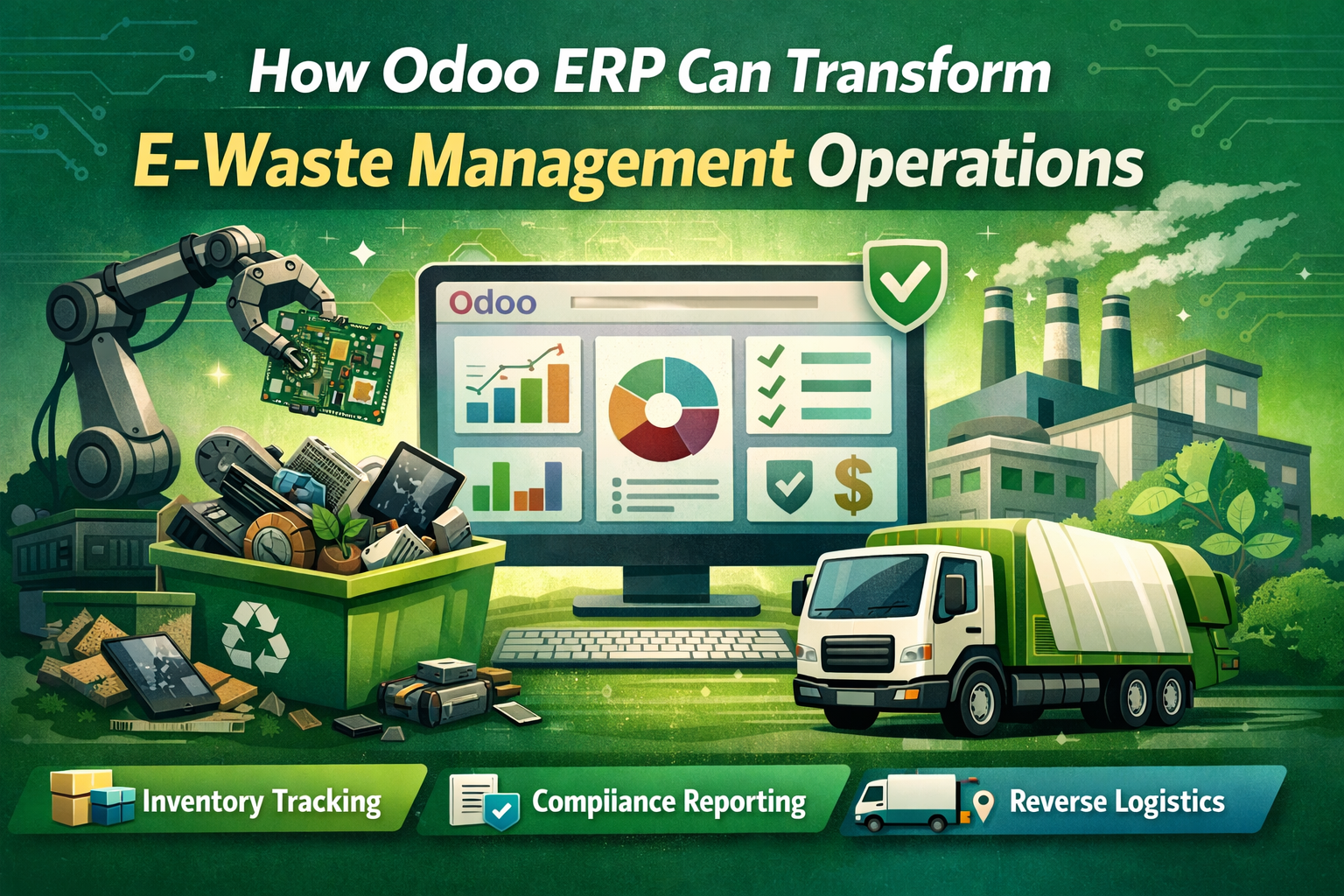
How Odoo ERP Can Transform E-Waste Management Operations
Introduction
Electronic waste is increasing rapidly across the world. Recycling companies must manage large volumes of discarded electronics while ensuring environmental compliance. Odoo ERP for e-waste management helps recycling businesses automate inventory tracking, manage waste collection, streamline logistics, and improve compliance reporting through a single integrated platform.
E-waste recycling companies deal with multiple operational activities such as waste collection, transportation, inventory tracking, recycling processes, and compliance reporting. Without proper digital systems, these activities become difficult to manage and monitor. This is why many recycling companies are adopting ERP systems to automate and streamline their operations.
One of the most powerful solutions for this industry is Odoo ERP for e-waste management. Odoo ERP helps recycling companies manage inventory, logistics, compliance reporting, and financial operations from a single integrated platform. By implementing ERP software, recycling businesses can improve operational efficiency, maintain transparency, and reduce operational costs.
Challenges Faced by E-Waste Recycling Companies
The e-waste recycling industry faces several operational challenges that impact efficiency and profitability. Many recycling companies still rely on spreadsheets or manual records to track their operations. This approach often leads to data errors, poor visibility, and inefficient workflows.
One of the major challenges is managing different types of waste materials. Recycling plants receive various electronic components such as circuit boards, batteries, cables, plastic components, and metal parts. Tracking these materials accurately is extremely difficult without a centralized system.
Another major issue is traceability. Recycling companies must track where the waste is collected from, how it is processed, and what materials are recovered during recycling. Without proper traceability systems, it becomes difficult to maintain transparency and regulatory compliance.
Compliance reporting is another critical challenge. Governments require recycling companies to maintain detailed records of waste collection, recycling activities, and disposal processes. Manual reporting increases the chances of errors and delays, which can lead to compliance issues.
Additionally, logistics management in the recycling industry is complex. Waste must be collected from multiple locations and transported to recycling facilities. Without automated route planning and fleet management systems, transportation costs increase and operational efficiency decreases.
These challenges highlight the need for digital solutions such as ERP systems that can automate operations and improve visibility across the entire recycling process.
What is Odoo ERP for E-Waste Management?
Odoo ERP is an integrated business management system that helps organizations manage their core operations through a single platform. It includes modules for inventory management, logistics management, accounting, customer relationship management, and reporting.
When implemented in the recycling industry, Odoo ERP helps companies manage the entire lifecycle of electronic waste. From collection to recycling and final disposal, every process can be tracked and monitored through the ERP system.
Odoo ERP provides real-time visibility into operations, enabling recycling companies to make informed decisions. It eliminates manual processes and helps businesses automate workflows, improve operational efficiency, and maintain accurate records.
Many companies in the recycling and disposal industry are now adopting ERP systems to manage complex operations. A detailed overview of ERP usage in this sector can also be found here:
https://www.pptssolutions.com/blogs/erp-for-recycling-and-disposal-industry
Key Features of Odoo ERP for Recycling Businesses
Smart Inventory Management
Inventory management is one of the most critical aspects of e-waste recycling operations. Recycling plants receive different types of scrap materials that must be categorized, stored, and processed properly.
Odoo ERP provides a powerful inventory management system that allows businesses to track scrap materials, hazardous components, and recovered metals in real time. The system supports barcode tracking, warehouse location management, and batch tracking. These features help recycling companies maintain accurate inventory records and reduce material loss.
With ERP-based inventory management, businesses gain complete visibility into their warehouse operations. This improves stock control and ensures that recycling materials are processed efficiently.
Waste Traceability and Tracking
Traceability is extremely important in the recycling industry. Companies must maintain clear records of waste sources, processing stages, and final outputs.
Odoo ERP allows businesses to track electronic waste throughout the entire recycling lifecycle. From collection points to recycling facilities and final material recovery, every stage can be recorded in the system.
This level of transparency helps businesses maintain compliance with environmental regulations and improves accountability across operations.
Reverse Logistics and Waste Collection Management
Reverse logistics plays a crucial role in e-waste management. Recycling companies must collect waste from multiple locations including households, businesses, and collection centers.
Odoo ERP helps businesses manage waste pickup schedules, route planning, and fleet tracking. By automating logistics processes, companies can reduce transportation costs and improve collection efficiency.
Route optimization features also help companies reduce fuel consumption and improve delivery timelines.
Automated Compliance Reporting
Environmental regulations require recycling companies to maintain accurate documentation of waste collection, recycling activities, and disposal records.
Odoo ERP automates compliance reporting by generating detailed reports on recycling operations. Businesses can easily track waste quantities, recycling output, and disposal records through automated dashboards.
This significantly reduces administrative work and ensures that businesses remain compliant with regulatory requirements.
Financial and Cost Management
Managing operational costs is another important aspect of the recycling business. Odoo ERP provides integrated financial management tools that help companies track expenses, revenues, and profit margins.
Businesses can monitor operational costs related to logistics, labor, processing, and material recovery. Real-time financial insights allow management teams to make strategic decisions that improve profitability.
ERP systems also help companies identify inefficiencies and optimize resource utilization.
Benefits of ERP in the Recycling Industry
Implementing ERP software provides several advantages for recycling companies. Automation reduces manual work and improves operational efficiency. Employees can focus more on productive activities rather than maintaining spreadsheets and manual records.
ERP systems also improve data accuracy. Since all information is stored in a centralized database, businesses can easily access real-time insights and analytics.
Another major benefit is improved decision-making. Managers can monitor operational performance through dashboards and reports, enabling them to take corrective actions quickly.
Cost reduction is another significant advantage of ERP systems. By optimizing logistics, inventory management, and operational workflows, companies can reduce overall operational expenses.
ERP systems also improve collaboration between departments. Inventory teams, logistics teams, and management can access the same data, ensuring better coordination across the organization.
Why ERP is the Future of E-Waste Management
The recycling industry is evolving rapidly as environmental awareness increases and regulations become stricter. Companies must adopt modern technologies to manage growing volumes of electronic waste effectively.
Digital transformation is becoming essential for recycling companies that want to scale their operations and remain competitive. ERP systems provide the infrastructure required to manage complex recycling processes efficiently.
By implementing waste management ERP software, businesses can streamline operations, improve traceability, and enhance compliance management.
ERP adoption also enables companies to improve sustainability practices by ensuring responsible recycling and waste disposal.
ERP Implementation for Waste Management Businesses
Implementing ERP software requires proper planning, customization, and industry expertise. Recycling companies need ERP solutions that are tailored to their specific operational requirements.
Infozion provides specialized ERP implementation services for businesses looking to automate their operations and improve efficiency. With expertise in Odoo ERP implementation, Infozion helps organizations design customized ERP solutions that align with their operational needs.
Businesses interested in ERP implementation can learn more about the process here:
https://www.infozion.in/erp-implementation-phases/
With the right ERP strategy and implementation partner, recycling companies can achieve better operational control and long-term growth.
Conclusion
E-waste management companies face numerous operational challenges including inventory tracking, logistics coordination, compliance reporting, and cost management. Traditional manual systems are no longer sufficient to manage the growing complexity of recycling operations.
Odoo ERP provides a powerful solution for recycling businesses by integrating inventory management, logistics tracking, compliance reporting, and financial management into a single platform.
By adopting ERP technology, recycling companies can improve operational efficiency, reduce costs, maintain regulatory compliance, and build a scalable business model for the future.
Digital ERP systems will play a crucial role in transforming the recycling industry and helping businesses manage electronic waste more responsibly and efficiently.