 Infozion Technologies LLPInfozion Technologies LLP




EPR Tracking Software: Automate EPR Reporting and Compliance Using ERP
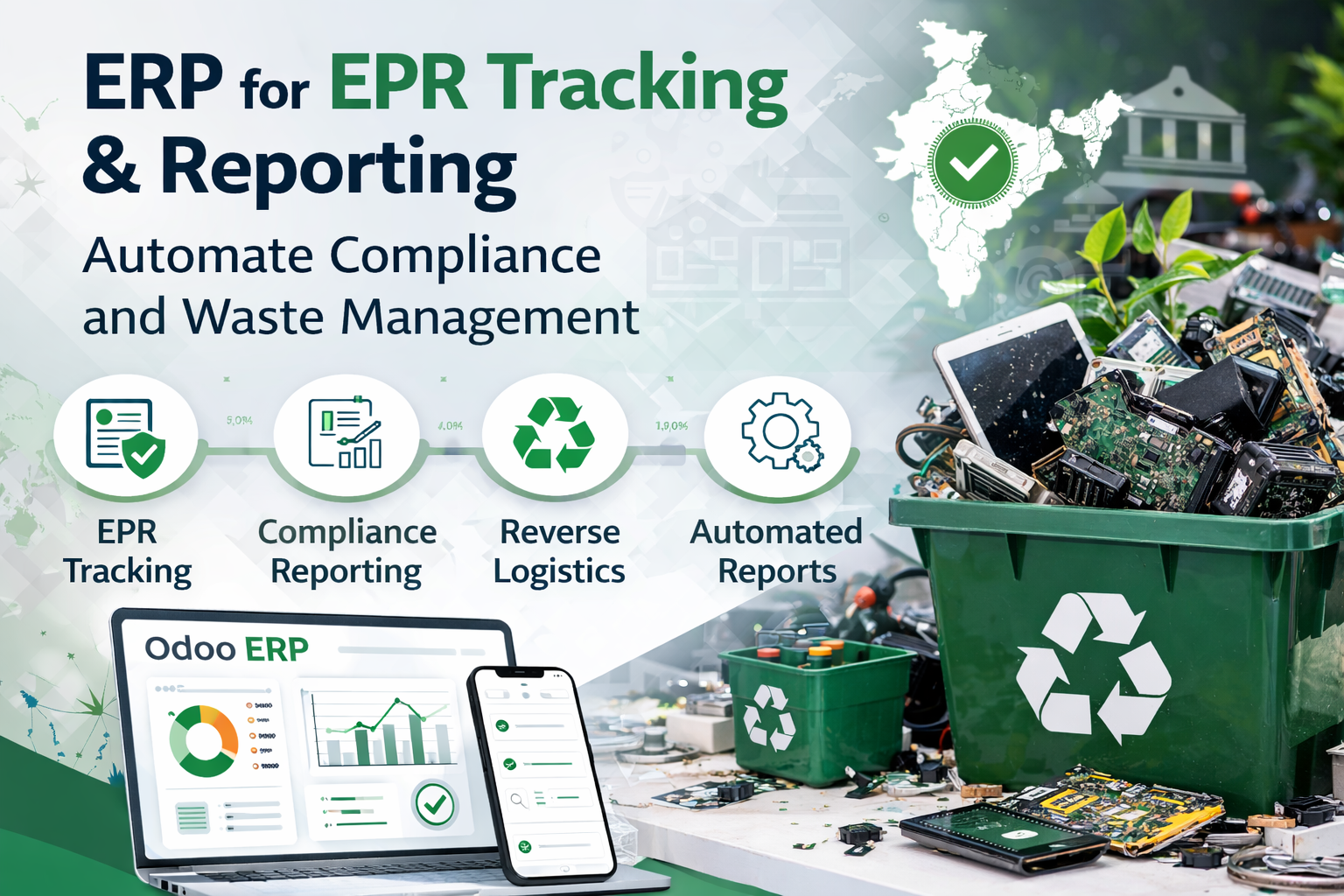
EPR Tracking Software: Automate EPR Reporting and Compliance Using ERP
Introduction
EPR tracking software helps businesses manage Extended Producer Responsibility compliance in a simple and efficient way. Companies dealing with electronic products must track waste collection, recycling, and reporting under EPR rules. However, manual processes are slow and error-prone. ERP systems solve this problem by automating tracking, reporting, and compliance tasks in one platform.
Businesses can use ERP solutions like
https://www.infozion.in/odoo-erp-for-e-waste-management/
to manage waste operations, improve visibility, and ensure accurate reporting.
What is EPR Tracking Software?
EPR tracking software is a digital solution that helps businesses monitor waste generation, collection, and recycling activities. It ensures that companies meet government regulations and maintain proper records.
EPR compliance requires companies to take responsibility for the entire lifecycle of their products. This includes collection, recycling, and safe disposal.
To understand global EPR practices, read here:
https://www.sensoneo.com/waste-library/evolution-epr-compliance/
Why Businesses Need EPR Tracking Software
Businesses face many challenges while managing EPR compliance manually. Data tracking becomes difficult. Reporting takes time. Errors are common.
EPR tracking software solves these problems by providing automation and real-time data.
Companies can track waste volumes, monitor recycling activities, and generate reports instantly. This improves efficiency and reduces compliance risks.
How ERP Helps in EPR Tracking Software
ERP systems play a major role in improving EPR management system capabilities. They connect different business processes into one system.
With ERP, businesses can:
-
Track waste collection
-
Monitor recycling processes
-
Manage inventory
-
Generate compliance reports
ERP solutions like
https://www.infozion.in/e-waste-management-rules-2022-india-erp/
help businesses align operations with regulatory requirements.
Automated EPR Reporting
Reporting is a key part of EPR compliance. Businesses must submit accurate reports to authorities.
EPR management system automates this process. It collects data and generates reports instantly.
This reduces manual work. It also improves accuracy and saves time.
Companies using
https://www.infozion.in/odoo-erp-for-e-waste-management/
can automate reporting and avoid compliance errors.
Waste Tracking and Traceability
Tracking waste is important for compliance. Businesses must know where waste comes from and where it goes.
ERP for EPR compliance provides full visibility. It tracks waste from collection to recycling.
This improves transparency. It also helps companies meet regulatory standards.
Reverse Logistics Management
Reverse logistics is a key part of EPR. Businesses must collect waste from different locations.
ERP systems help manage pickup schedules and routes. They also track transportation activities.
With
https://www.infozion.in/e-waste-management-rules-2022-india-erp/
Companies can improve logistics and reduce costs.
Benefits of EPR Tracking Software
EPR tracking software offers many benefits.
First, it improves efficiency. Businesses can automate routine tasks.
Second, it increases accuracy. Data is stored in one system.
Third, it ensures compliance. Reports are generated on time.
Finally, it improves decision-making. Managers get real-time insights.
Why ERP is the Future of EPR Compliance
Regulations are becoming stricter. Businesses must adopt digital solutions.
Manual systems are no longer enough. ERP systems provide better control and visibility.
With EPR tracking software, companies can automate processes, reduce errors, and improve performance.
Businesses can explore ERP solutions here:
https://www.infozion.in/odoo-erp-for-e-waste-management/
Conclusion
EPR tracking software is essential for businesses managing electronic waste. It helps automate tracking, reporting, and compliance processes.
ERP systems make EPR management simple and efficient. They improve accuracy, reduce costs, and ensure compliance.
Companies that adopt ERP solutions will be better prepared for future regulations and sustainable growth.
Introduction
The E-Waste Management Rules 2022 India have introduced stricter compliance requirements for manufacturers, producers, importers, and recycling companies dealing with electronic waste. Businesses are now required to maintain proper records of e-waste collection, recycling, and disposal while ensuring compliance with Extended Producer Responsibility (EPR) regulations. Managing these regulatory requirements manually can be complex and time-consuming.
To simplify compliance processes, many companies are adopting ERP systems. ERP software helps organizations automate data management, track e-waste lifecycle processes, and generate accurate compliance reports. With a centralized system in place, companies can ensure they follow E-Waste Management Rules 2022 India while improving operational transparency and efficiency.
Businesses looking to modernize their recycling operations can also explore ERP solutions such as
https://www.infozion.in/odoo-erp-for-e-waste-management/
which help automate waste tracking and regulatory reporting.
Understanding E-Waste Management Rules 2022 India
The E-Waste Management Rules 2022 India were introduced by the government to regulate the generation, collection, recycling, and disposal of electronic waste. These rules aim to ensure environmentally responsible handling of electronic products once they reach the end of their lifecycle.
Under these regulations, producers, manufacturers, and recycling companies must follow strict compliance procedures. They must register with regulatory authorities, maintain accurate records of waste handling activities, and submit periodic reports related to recycling and disposal.
The rules also emphasize Extended Producer Responsibility (EPR), which makes producers responsible for the collection and recycling of electronic waste generated from their products. This ensures that companies take accountability for environmental sustainability.
Companies seeking guidance on EPR authorization and regulatory requirements can review detailed compliance information here:
https://cliniexperts.com/india-regulatory-services/diagnostic-kit/epr-authorization-certificate-from-cpcb-for-e-waste-in-india/
Compliance Challenges Faced by Businesses
Many organizations struggle to comply with E-Waste Management Rules 2022 India because regulatory processes involve multiple steps, documentation requirements, and reporting obligations.
One of the biggest challenges is maintaining accurate records of electronic waste collection and recycling activities. Businesses must track how much waste is generated, where it is collected from, and how it is processed. Without proper digital systems, maintaining this information becomes difficult.
Another challenge is reporting compliance data to regulatory authorities. Companies must submit regular reports related to waste collection volumes, recycling activities, and disposal records. Manual reporting increases the chances of errors and delays.
Logistics and reverse supply chain management also create operational complexity. E-waste must be collected from multiple locations and transported to recycling facilities while maintaining proper documentation.
Because of these challenges, businesses are increasingly turning to ERP systems to manage compliance operations efficiently.
Role of ERP in E-Waste Compliance Management
ERP systems play a critical role in helping businesses comply with E-Waste Management Rules 2022 India. ERP software integrates multiple business processes into a single platform, allowing companies to track waste management activities in real time.
With ERP implementation, organizations can monitor waste collection, recycling processes, and inventory levels from a centralized dashboard. This provides complete visibility into operations and ensures accurate documentation.
ERP systems also automate reporting processes. Companies can generate compliance reports instantly without manually compiling data from different sources. This reduces administrative workload and improves data accuracy.
Businesses implementing ERP solutions such as
https://www.infozion.in/odoo-erp-for-e-waste-management/
can streamline their recycling operations while ensuring regulatory compliance.
How ERP Helps with EPR Compliance
Extended Producer Responsibility is one of the most important components of E-Waste Management Rules 2022 India. Under EPR regulations, producers must ensure that a specific quantity of electronic waste is collected and recycled.
ERP software helps organizations manage EPR compliance effectively by tracking product lifecycle data and waste collection activities. Companies can monitor how much waste is collected through authorized recycling channels and ensure that recycling targets are achieved.
ERP systems also help maintain digital records of EPR activities. These records are essential for regulatory audits and compliance verification.
With automated dashboards and reporting tools, companies can easily monitor EPR performance and ensure that they meet regulatory obligations.
Inventory Tracking and Waste Traceability
Proper inventory tracking is essential for compliance with E-Waste Management Rules 2022 India. Recycling companies must maintain records of electronic waste received, processed, and recycled.
ERP systems provide advanced inventory management capabilities that help businesses track waste materials in real time. From collection centers to recycling plants, every stage of the waste lifecycle can be monitored through the system.
Traceability features ensure that businesses know exactly where waste originates and how it is processed. This level of transparency improves compliance management and reduces the risk of regulatory violations.
ERP software also helps companies track recovered materials such as metals, plastics, and other reusable components. This information is valuable for operational planning and sustainability reporting.
Reverse Logistics and Waste Collection Management
Reverse logistics is another critical component of compliance under E-Waste Management Rules 2022 India. Businesses must establish efficient systems for collecting electronic waste from consumers, retailers, and collection centers.
ERP solutions help companies plan waste pickup schedules, manage fleet operations, and optimize collection routes. By automating logistics processes, businesses can improve efficiency while reducing transportation costs.
Route optimization features ensure that waste is collected and transported in the most efficient way possible. This not only improves operational performance but also helps companies meet regulatory collection targets.
ERP systems also maintain digital records of waste collection activities, which are required for compliance reporting.
Benefits of Using ERP for E-Waste Compliance
Implementing ERP software provides several benefits for organizations dealing with electronic waste management.
First, ERP systems improve operational efficiency by automating routine tasks such as data entry, inventory updates, and report generation. Employees can focus on more productive activities instead of maintaining manual records.
Second, ERP solutions improve data accuracy. Since all information is stored in a centralized system, businesses can access real-time insights into their operations.
Third, ERP systems enhance regulatory compliance. Companies can easily generate reports required under E-Waste Management Rules 2022 India and ensure that they meet reporting deadlines.
Finally, ERP implementation improves transparency across the organization. Management teams can monitor waste management activities through dashboards and analytics tools.
Why Recycling Companies Need ERP Systems
As environmental regulations become stricter, recycling companies must adopt digital technologies to manage their operations efficiently. Manual systems are no longer sufficient to handle the complexity of regulatory compliance and waste tracking.
ERP systems provide the infrastructure needed to manage waste collection, recycling operations, and compliance reporting effectively. By implementing ERP solutions, companies can streamline operations and maintain accurate documentation.
Organizations that want to automate their recycling processes can explore ERP implementation solutions here:
https://www.infozion.in/odoo-erp-for-e-waste-management/
With the right ERP system in place, businesses can ensure compliance with E-Waste Management Rules 2022 India while improving operational efficiency.
Conclusion
Compliance with E-Waste Management Rules 2022 India is essential for businesses involved in electronic waste management. These regulations aim to promote responsible recycling practices and ensure environmental sustainability.
However, managing compliance manually can be challenging due to complex reporting requirements and operational processes. ERP systems provide a powerful solution by automating waste tracking, compliance reporting, and inventory management.
By adopting ERP technology, companies can ensure regulatory compliance, improve operational transparency, and build a more efficient recycling ecosystem.
Digital ERP solutions will play a critical role in helping businesses adapt to evolving environmental regulations and achieve sustainable waste management practices.