 Infozion Technologies LLPInfozion Technologies LLP




E-Waste Inventory & Traceability Challenges (And How ERP Solves Them)
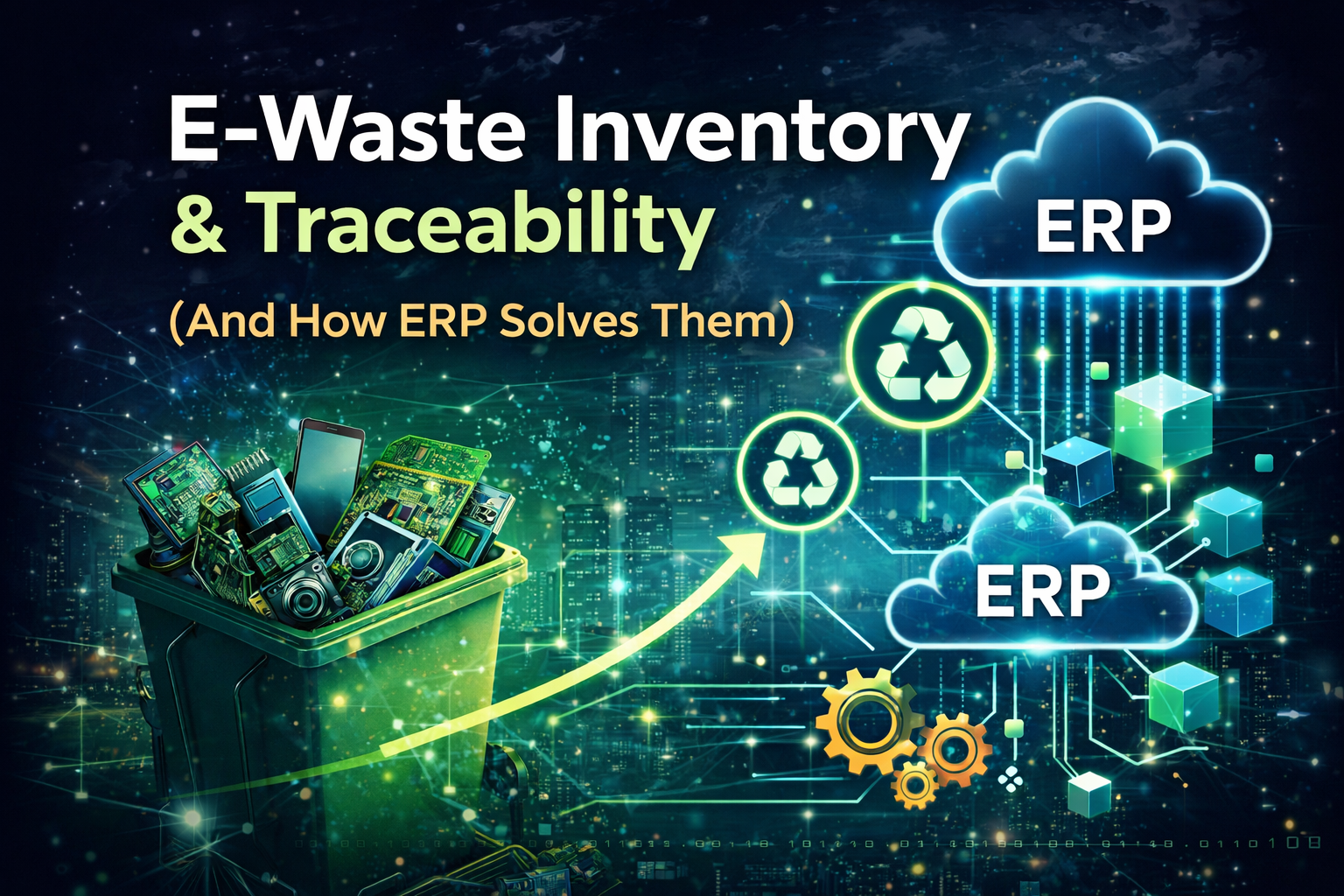
E-Waste Inventory & Traceability Challenges (And How ERP Solves Them)
Introduction
E-waste inventory management is one of the biggest challenges faced by recycling companies today. As the volume of electronic waste increases, businesses struggle to track materials, maintain accurate records, and ensure proper traceability throughout the recycling process. Without a proper system, companies often face inventory mismatches, compliance issues, and operational inefficiencies. This is where ERP systems play a critical role by automating inventory tracking and improving traceability across the entire e-waste lifecycle.
Businesses looking to modernize their operations can implement solutions like
https://www.infozion.in/odoo-erp-for-e-waste-management/
to streamline inventory management and ensure complete visibility.
What is E-Waste Inventory Management?
E-waste inventory management refers to the process of tracking electronic waste materials from collection to recycling and final disposal. It includes monitoring different types of waste such as circuit boards, batteries, plastics, and metals.
Effective e-waste inventory management ensures that businesses maintain accurate records of materials, reduce losses, and improve operational efficiency. However, manual systems often fail to handle the complexity of recycling operations.
Why Traceability is Critical in E-Waste Recycling
Traceability means tracking the movement of waste materials at every stage. It helps businesses understand where the waste comes from, how it is processed, and where it goes after recycling.
Without proper traceability, companies face serious risks such as regulatory non-compliance, data errors, and operational inefficiencies.
To understand the environmental importance of proper e-waste handling, refer to this detailed resource:
Major Challenges in E-Waste Inventory Management
Lack of Real-Time Tracking
Many recycling companies still use spreadsheets or manual systems. This makes it difficult to track inventory in real time.
As a result, businesses face delays, errors, and poor decision-making.
Inventory Mismatch and Loss
When data is not updated properly, inventory mismatches occur. This leads to material loss and financial impact.
Accurate e-waste inventory management is essential to avoid such issues.
Complex Waste Categorization
E-waste consists of multiple components. Sorting and categorizing materials manually is time-consuming and error-prone.
Compliance and Reporting Issues
Regulations require companies to maintain detailed records of waste handling. Without proper systems, compliance becomes difficult.
Lack of End-to-End Traceability
Tracking waste from collection to recycling is challenging without a centralized system.
How ERP Solves E-Waste Inventory Challenges
ERP systems provide a centralized platform to manage inventory and traceability.
With ERP, businesses can track waste materials in real time, manage inventory efficiently, and automate reporting processes.
Companies can explore ERP solutions here:
https://www.infozion.in/e-waste-management-rules-2022-india-erp/
ERP also improves data accuracy and reduces manual errors.
Real-Time Inventory Visibility
ERP systems provide real-time visibility into inventory levels. Businesses can track materials across different locations and warehouses.
This improves operational efficiency and reduces inventory loss.
End-to-End Traceability
ERP enables complete traceability of waste materials. From collection to final disposal, every step is recorded in the system.
This ensures transparency and helps businesses maintain compliance.
Automated Reporting and Compliance
ERP systems generate reports automatically. This helps businesses meet regulatory requirements without manual effort.
Companies using
https://www.infozion.in/odoo-erp-for-e-waste-management/
can simplify compliance and improve reporting accuracy.
Improved Decision Making
With real-time data and analytics, businesses can make better decisions. ERP dashboards provide insights into inventory levels, processing efficiency, and operational performance.
Benefits of ERP in E-Waste Recycling
ERP systems offer multiple benefits for recycling companies.
They improve efficiency, reduce costs, and enhance transparency. Businesses can manage operations more effectively and scale their processes easily.
ERP also helps in optimizing resource utilization and improving overall performance.
Why Businesses Must Adopt ERP for Waste Tracking
As the e-waste industry grows, companies must adopt digital solutions to stay competitive.
Manual systems are no longer sufficient to handle complex operations.
ERP systems provide the tools needed to manage inventory, track waste, and ensure compliance.
Future of E-Waste Inventory Management
The future of e-waste tracking systems lies in digital transformation. Technologies such as AI, IoT, and automation will further improve tracking and traceability.
Businesses that adopt ERP systems today will be better prepared for future challenges.
Conclusion
E-waste recycling companies face significant challenges in inventory management and traceability. Manual systems lead to errors, inefficiencies, and compliance risks.
ERP systems provide a powerful solution by automating inventory tracking, improving traceability, and ensuring compliance.
By implementing ERP, businesses can improve efficiency, reduce costs, and build a scalable waste management system.
What is e-waste inventory management?
Waste inventory tracking is the process of tracking electronic waste materials from collection to recycling and disposal.
Why is traceability important in e-waste recycling?
Traceability ensures transparency, helps in compliance, and allows businesses to track waste throughout its lifecycle.
How does ERP help in waste management?
ERP systems automate inventory tracking, improve traceability, and generate compliance reports.
What are the biggest challenges in e-waste inventory management?
Challenges include lack of real-time tracking, inventory mismatch, compliance issues, and poor traceability.
How can businesses improve waste tracking?
Businesses can improve waste tracking by implementing ERP systems and automating their processes.