 Infozion Technologies LLPInfozion Technologies LLP




How to Architect an App That Can Handle 1 Million Users
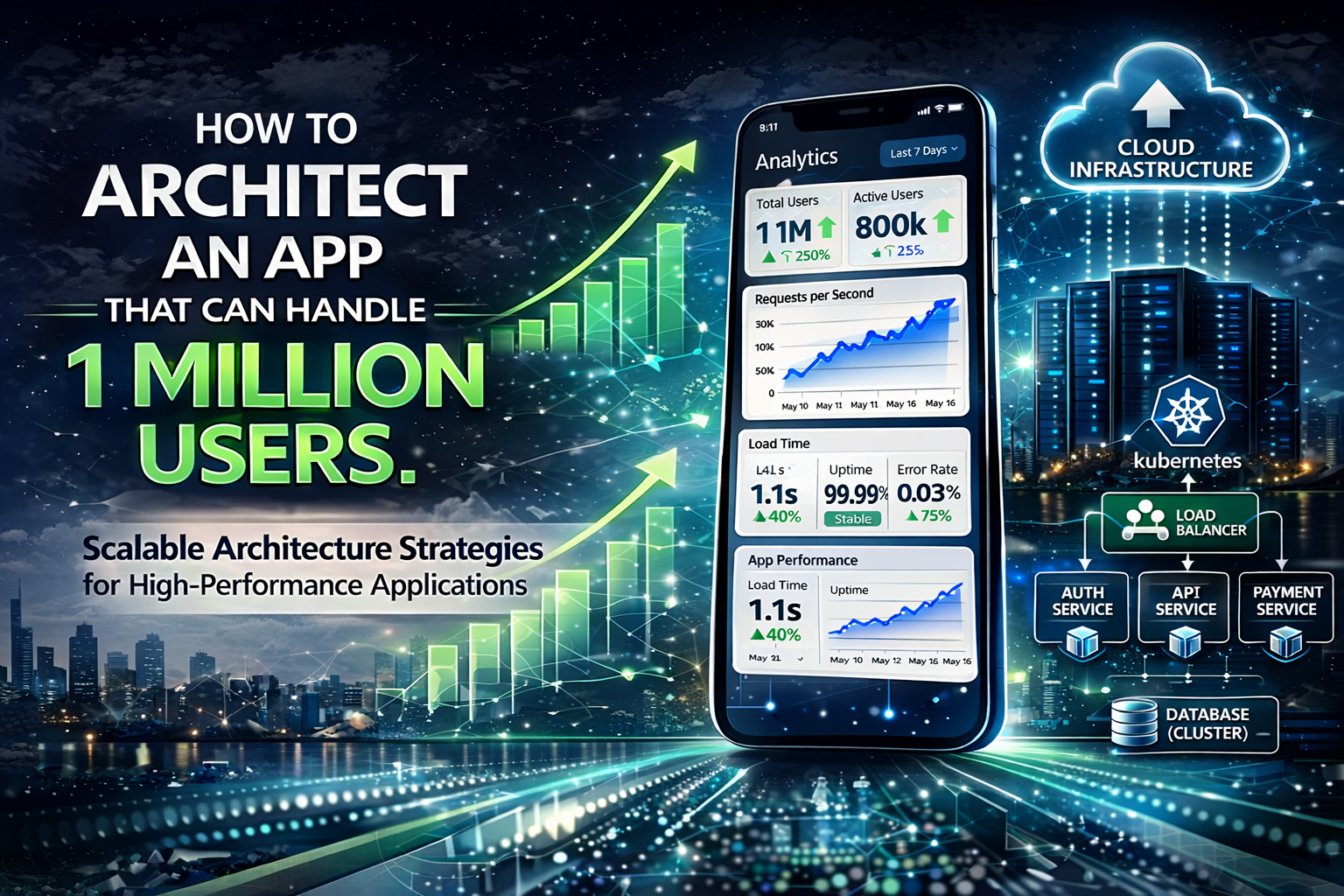
How to Architect an App That Can Handle 1 Million Users
Introduction
How to Architect an App That Can Handle 1 Million Users is one of the most important questions for businesses aiming to build scalable digital products. As user demand increases, applications must handle large volumes of traffic, data processing, and real-time interactions without performance issues. Without proper architecture, even a well-designed app can crash under high load, leading to poor user experience and business losses.
To build a scalable and future-ready system, businesses must focus on modern architecture patterns, cloud infrastructure, and performance optimization strategies. Companies planning to upgrade their systems can explore solutions like
https://www.infozion.in/app-modernization-services/
to transform legacy applications into scalable and high-performance systems.
What Does It Mean to Architect a Scalable App?
Architecting an app means designing its structure in a way that it can handle growth efficiently. When we talk about how to architect an app that can handle 1 million users, we refer to building systems that maintain performance, speed, and reliability even under heavy load.
A scalable app architecture ensures that the system can handle increasing users without requiring a complete redesign. It focuses on flexibility, performance, and efficient resource utilization.
Why Scalability Matters for Modern Applications
Scalability is not optional anymore. Today’s users expect instant responses and seamless experiences. Even a slight delay can lead to user drop-offs and negative reviews.
When an app is not designed properly, it may face server crashes, slow performance, and data inconsistencies. These issues directly impact user retention and revenue.
A scalable architecture ensures that your application can grow without compromising performance. It also allows businesses to expand their services and handle future demand effectively.
Core Components of a Scalable App Architecture
To understand how to architect an app that can handle 1 million users, it is important to break down the core components of a scalable system.
Backend Infrastructure
The backend is the foundation of your application. It handles requests, processes data, and manages communication between different components.
A scalable backend should be capable of handling multiple requests simultaneously without delays. Cloud-based infrastructure plays a key role here.
Database Management
As user data increases, database performance becomes critical. A poorly designed database can become a bottleneck.
Efficient database design ensures faster queries, better performance, and improved data management.
APIs and Communication
APIs act as a bridge between the frontend and backend. Efficient API design ensures faster communication and reduced latency.
Load Management
Handling user requests efficiently is essential. Systems must distribute traffic across servers to avoid overload.
Best Architecture Patterns for Handling 1 Million Users
Microservices Architecture
Microservices architecture divides the application into smaller independent services. Each service handles a specific function and can scale independently.
This approach improves flexibility and makes it easier to manage large applications.
Monolith vs Microservices
While monolithic architecture works for small applications, it becomes difficult to scale as the user base grows.
Microservices provide better scalability, fault isolation, and faster development cycles.
Serverless Architecture
Serverless computing allows businesses to run applications without managing servers. It automatically scales based on demand.
This reduces infrastructure complexity and improves efficiency.
Infrastructure Strategies for Scaling
Cloud Computing
Cloud platforms provide on-demand resources, making it easier to scale applications.
They offer flexibility, cost efficiency, and high availability.
Load Balancing
Load balancers distribute traffic across multiple servers. This prevents any single server from becoming overloaded.
Auto Scaling
Auto scaling automatically increases or decreases resources based on traffic demand. This ensures consistent performance.
Database Scaling Techniques
Database scaling is critical when handling large user bases.
Horizontal scaling allows data to be distributed across multiple servers. This improves performance and reduces load on a single database.
Caching is another important technique. It stores frequently accessed data, reducing database queries and improving response time.
Performance Optimization Strategies
To handle 1 million users, performance optimization is essential.
Optimizing code, reducing unnecessary processes, and improving response times are key factors. Efficient data handling and faster APIs also contribute to better performance.
Developers must continuously monitor system performance and identify bottlenecks.
Role of App Modernization in Scalability
Legacy systems often struggle to handle modern user demands. Businesses must upgrade their applications to stay competitive.
App modernization helps in:
- Migrating to cloud infrastructure
- Improving system performance
- Enhancing scalability
Companies can leverage
https://www.infozion.in/app-modernization-services/
to build scalable applications that can handle high user traffic efficiently.
Real-World Insights and Architecture Practices
Many successful companies use advanced architecture strategies to handle millions of users.
To understand practical implementation, refer to this detailed guide:
This resource explains real-world techniques used by businesses to build scalable applications.
Common Mistakes to Avoid
One of the biggest mistakes is ignoring scalability during the initial development phase. Many businesses focus only on features and overlook architecture.
Poor database design, lack of monitoring, and outdated technology also create problems when scaling.
Avoiding these mistakes helps build a strong and scalable system.
Future Trends in Scalable App Architecture
Technology is evolving rapidly, and new trends are shaping app architecture.
Artificial intelligence is being used for predictive scaling. Edge computing is reducing latency by processing data closer to users.
Real-time processing and distributed systems are becoming more popular.
Conclusion
Understanding how to architect an app that can handle 1 million users is essential for building successful digital products. Scalability ensures that your application performs well even as user demand increases.
By adopting modern architecture patterns, cloud infrastructure, and performance optimization techniques, businesses can create systems that handle growth efficiently.
Scalability is not just about handling traffic—it is about delivering a seamless and reliable user experience.
How do you architect an app for 1 million users?
To architect an app for 1 million users, use microservices architecture, cloud infrastructure, load balancing, caching, and database optimization to handle high traffic efficiently.
What is the best architecture for scalable apps?
Microservices architecture is considered the best because it allows independent scaling and improves flexibility.
How does cloud computing help scalability?
Cloud computing provides on-demand resources, auto scaling, and high availability, making it easier to handle large user traffic.
What are common challenges in scaling apps?
Challenges include database bottlenecks, traffic spikes, latency issues, and poor architecture design.
Why is app modernization important for scaling?
App modernization improves performance, enables cloud migration, and enhances scalability, helping applications handle more users efficiently.