 Infozion Technologies LLPInfozion Technologies LLP




Which is Better: PHP or Laravel?

Which is Better: PHP or Laravel?
When choosing the right technology for web development, the debate between PHP and Laravel often surfaces among developers and businesses alike. But to fully grasp the essence of this discussion, we must first understand that Laravel is a framework built on PHP itself—not an entirely separate technology. This comparison, therefore, leans more on understanding the difference between using raw PHP (a programming language) and embracing Laravel (a framework that simplifies and enhances PHP). Here’s a deep dive into each, helping you decide which might be better suited for your project needs.
Understanding PHP
PHP (Hypertext Preprocessor) is a widely-used, open-source scripting language that has been a cornerstone of web development for over two decades. It’s particularly favored for its flexibility, ease of integration with various databases, and strong HTML compatibility. PHP scripts can run on various platforms (Windows, Linux, Unix, etc.), making it a highly versatile option for server-side scripting.
Key Features of PHP:
- Simplicity: PHP is relatively easy to learn due to its straightforward syntax. Beginners can quickly build simple web applications.
- Flexibility: It’s a dynamically typed language, offering high flexibility in terms of coding styles and approaches.
- Compatibility: PHP is compatible with almost all servers used today (Apache, IIS, etc.) and supports a wide range of databases.
- Cost-effective: Being open-source, it reduces development costs significantly.
However, PHP is not without its drawbacks. Its flexibility can sometimes lead to inconsistent code, and without strict guidelines, maintaining larger applications can become a challenge. This is where frameworks like Laravel come into the picture.
Exploring Laravel
Laravel, founded by Taylor Otwell in 2011, is a free, open-source PHP web framework for developing web applications following the model-view-controller (MVC) architectural pattern. It is built on top of several Symfony components, providing a solid foundation of reliable and well-tested code.
Key Features of Laravel:
- Elegant Syntax: Laravel is designed to make the development process pleasing for the developer without sacrificing application functionality. Its sleek syntax simplifies tasks commonly seen in web projects.
- Modular: Laravel’s package-based system means you can add functionalities without writing them from scratch.
- MVC Architecture: This ensures clarity between logic and presentation, which aids in better documentation, improved performance, and greater scalability.
- Robust Features: It includes built-in support for routing, user authentication, sessions, and caching, to name a few.
Laravel significantly reduces the coding complexity of PHP, especially for large-scale applications. It handles many aspects of web development (such as routing, templating, and security), which can be time-consuming and complex in plain PHP.
PHP vs. Laravel: A Comparative Analysis
To determine which is better, we must consider various factors, including ease of use, scalability, security, community support, and overall developer productivity.
Ease of Use
- PHP: Offers simplicity and a gentle learning curve, but managing everything manually can be cumbersome as the application grows.
- Laravel: Streamlines tasks, provides numerous pre-built functions, and a command-line tool called Artisan accelerates many tasks.
Scalability
- PHP: Scalability largely depends on the developer’s ability to structure the code and manage resources.
- Laravel: Built-in features and its MVC architecture make it inherently more scalable and easier to manage.
Security
- PHP: While PHP itself is secure, developers must manually implement security measures, which can be error-prone.
- Laravel: Offers robust security features such as protection from SQL injection, cross-site request forgery, and cross-site scripting.
Community Support
- PHP: Has a vast and active community. You’ll find more resources and forums since it’s been around for much longer.
- Laravel: It also has a strong community, though smaller than PHP’s. However, it is very active, and the support is generally very responsive.
Developer Productivity
- PHP: Productivity can vary significantly based on the developer’s expertise.
- Laravel: Boosts developer productivity with built-in tools and streamlined workflow for everyday tasks.
Conclusion: Which Should You Choose?
The choice between PHP and Laravel depends on the specific needs of your project. PHP might be sufficient if you’re building a small, straightforward site and have a knack for managing your codebase. However, for larger, more complex projects requiring robust features out of the box, Laravel could save you time and hassle.
In essence, Laravel is not seen as a replacement for PHP but as an enhancement. It provides a structured and substantial backing for building modern web applications efficiently while still harnessing the power of PHP. Thus, understanding your project’s requirements and future scalability should guide your decision between sticking with raw PHP or opting for Laravel’s robust framework.
Gurgaon, a bustling technological hub, has seen a significant rise in demand for advanced web development solutions. Among these, Laravel, a robust PHP framework, stands out for its elegant syntax and strong features. This article explores the essence of Laravel development services in Gurgaon, highlighting the benefits, advantages, and exceptional services our team offers.
What is Laravel Development Services in Gurgaon?
Laravel is an open-source PHP framework designed for web artisans. It simplifies tasks that are often used in web projects, such as authentication, routing, sessions, and caching. Laravel aims to make the development process a pleasant experience for developers without sacrificing application functionality. In Gurgaon, Laravel development services encompass a range of offerings, from custom web application development to API building.
Key Features of Laravel:
- Eloquent ORM (Object-Relational Mapping): An advanced PHP implementation lets developers issue database queries with PHP syntax instead of writing SQL code.
- Task Scheduling: This allows you to define the command schedule fluently within Laravel without needing a separate cron entry for each task.
- Security: Laravel helps secure web applications by protecting against the most serious security risks: SQL injection, cross-site request forgery, and scripting.
- MVC Architecture: Ensures clarity between logic and presentation, which is particularly beneficial for large projects.
Benefits of Laravel Development Services
Laravel provides numerous benefits that make it a preferred choice for developers and businesses alike:
- Modular: The framework is built on over 20 different libraries and divided into individual modules. This allows developers to build responsive, modular, and handy applications.
- Rapid Development: Its pre-built functions and tools facilitate rapid application development, saving businesses time and resources.
- Migration System for Databases: The laravel migration system helps expand the database structure without recreating it whenever a change is made, thereby reducing the risk of losing data.
- Unit-Testing: Laravel is built with testing in mind. Support for testing with PHPUnit is included out of the box, and a php.xml file is already set up for your application.
Advantages of Laravel Development Services
Laravel comes with a plethora of advantages that help streamline complex coding tasks:
- Routing System: Laravel provides a flexible and straightforward way to define routes by using the method chain.
- Blade Templating Engine: Blade is a simple yet powerful templating engine provided with Laravel, unlike any other PHP templating engine. It does not restrict you from using plain PHP code in your views.
- Background Job Processing: Laravel queue service provides a unified API across various queue backends, such as Amazon SQS, Redis, or a relational database.
Our Laravel Development Services
At our core in Gurgaon, we offer a comprehensive suite of Laravel development services tailored to meet diverse business needs:
- Custom Laravel Web Development: We specialize in creating custom web solutions that cater to your business requirements, utilizing Laravel to ensure a scalable, reliable, and secure web application.
- Laravel API Development: Our developers are skilled in API generator packages that help you easily create robust APIs for your applications, ensuring smooth communication between different software systems.
- Laravel Extension Development: We enhance the functionality of your existing Laravel applications by developing and integrating custom extensions that provide more features and capabilities.
- Maintenance and Support: Our job doesn’t end with the development. We provide comprehensive maintenance and support services to ensure your Laravel applications are always running smoothly.
- Migration to Laravel: We help businesses migrate from other frameworks to Laravel, taking advantage of its more advanced features and improved performance.
Why Choose Us for Laravel Development Services in Gurgaon?
- Expert Team: Our Laravel developers are highly skilled and keep themselves updated with the latest advancements in the Laravel framework.
- Customer-Centric Approach: We prioritize your needs and customize our services to meet your business objectives.
- Transparent Workflow: We maintain a transparent workflow and keep you informed throughout the process, ensuring there are no surprises.
Conclusion
Laravel development services in Gurgaon offer a powerful solution for developing high-quality web applications. With its features, benefits, and expert services, you can ensure that your web development needs are handled efficiently and effectively. Whether you’re looking to upgrade your existing system or build a new application from scratch, our Laravel development services can help propel your business to new heights.
Partnering with a seasoned team in Gurgaon
Introduction
Delhi, India’s bustling capital city, is a political and cultural hub and a thriving center for technological innovations. Among the myriad technological services, Laravel development stands out due to its robust features and flexibility. In this article, we dive deep into the world of Laravel development services in Delhi, exploring its benefits, advantages, and the premier services our company offers to transform your business digitally.
What is Laravel Development Services Delhi Message?
Laravel is a widely acclaimed PHP framework used for web application development. It is known for its elegant syntax, which is both easy to understand and powerful enough to handle complex web applications. Laravel development services in Delhi encompass a range of solutions, including custom Laravel web development, API development, and more, that are tailored to meet the diverse needs of businesses in the region.
Key Features of Laravel:
- MVC Architecture: Ensures clarity between logic and presentation, which aids in improving performance and allows better documentation.
- Routing: Laravel provides a simple and flexible way to define routes using various route methods.
- Eloquent ORM: An advanced PHP implementation of the active record pattern, providing internal methods for enforcing constraints on the relationships between database objects.
Benefits of Laravel Development Services
Laravel development services offer numerous benefits that can revolutionize how businesses operate online. Below are some of the significant benefits:
- Enhanced Security: Laravel helps secure web applications by protecting against threats such as SQL injection, cross-site request forgery, and scripting. Laravel uses hashed and salted passwords, meaning the password would never be saved as plain text in the database.
- Improved Performance: Tools like Memcached and Redis are integrated within the Laravel framework, aiding in the enhancement of web application performance.
- Simplified Authentication: Laravel makes implementing authentication very simple. Almost everything is configured out-of-the-box, which provides a simple way to organize authorization logic and control access to resources.
Advantages of Laravel Development Services
Choosing Laravel for your web development project comes with a myriad of advantages that can be pivotal for business success:
- Agility in Development: Laravel’s modular packaging system with a dedicated dependency manager allows for quick and agile development, saving businesses valuable time and resources.
- Automation of Testing Work: Laravel is built with testing in mind. Support for testing with PHPUnit is included out of the box, and a phpunit.xml file is already set up for your application.
- Comprehensive Tutorials (Laracasts): Laracasts provide a wealth of tutorials that are beneficial not just for skilled developers but also for newbies, making it easier to master the framework.
Our Laravel Development Services
Our company offers a comprehensive suite of Laravel development services designed to cater to all your business needs. Here’s what we offer:
- Custom Laravel Web Development: We build custom web applications that are robust, scalable, and tailored to meet the specific needs of your business.
- Laravel API Development: Our developers are adept at Laravel API generator packages that can help you create RESTful solutions, which can communicate with third-party clients like mobiles and extend your reach to a broader audience.
- Laravel Extension Development: Enhance your application’s functionality with our Laravel extension development services that help integrate various extensions with your Laravel web application.
Additional Services:
- Maintenance and Support: We provide comprehensive maintenance and support to ensure your Laravel applications run smoothly post-deployment.
- Migration Services: Safely migrate from one Laravel platform to another with our seamless migration services.
Why Choose Us for Laravel Development in Delhi?
Choosing the right Laravel development service provider in Delhi can be daunting, but our track record and expertise speak volumes:
- Experienced Developers: Our team comprises seasoned Laravel developers with extensive experience and creativity.
- Customer-Centric Approach: We prioritize your needs and focus on delivering solutions that meet and exceed your expectations.
- Transparent and Competitive Pricing: We offer straightforward pricing models that provide value for money, ensuring you get the best ROI.
Conclusion
Laravel development services in Delhi offer a perfect blend of affordability and quality, making it an ideal choice for businesses looking to build efficient, robust, and scalable web applications. Whether you are a startup or an established business, our Laravel development services are designed to take your business to the next level. Contact us today to discuss your Laravel development needs and discover how we can assist you in navigating the digital landscape effectively.
For more information on how we can assist you with Laravel development in Delhi, contact us today and take the first step towards transforming your digital strategy.
In the bustling tech city of Noida, choosing the right Laravel development services can significantly impact your business. Laravel, known for its elegance, simplicity, and robust features, powers some of the most innovative web applications today. In this comprehensive guide, we will explore the essence of Laravel development services, their benefits, advantages, and why our services stand out in Noida’s competitive market.
What is Laravel Development Services?
Laravel is a PHP framework designed for the development of web applications following the model-view-controller (MVC) architectural pattern. Laravel development services encompass a range of activities from custom web application development to maintenance and support, leveraging Laravel’s extensive capabilities to build scalable, secure, and efficient applications.
Key Features of Laravel:
- Routing System: Laravel provides a simple yet flexible routing approach that helps in the management of application routes.
- Eloquent ORM: An advanced ORM that supports almost every database and allows easy manipulation of database objects.
- Blade Templating: A powerful templating engine that enables developers to use plain PHP code in templates, enhancing performance.
- Migration System for Databases: It simplifies the management of database schema by enabling migrations, which are version-controlled.
- Task Scheduling: A scheduler built inside the framework, eliminating the need for a cron entry for each task.
Benefits of Laravel Development Services
Laravel development services offer numerous benefits that can transform the web development process into a more streamlined, efficient practice. Here are some of the top benefits:
- Modular Approach: Laravel’s modular packaging system helps with easy setup and customization, saving developers time and effort in building complex applications.
- Authentication and Authorization: Laravel simplifies implementation of authentication and provides easy configuration of authorization logic.
- Automated Testing: An inherent part of Laravel, automated testing ensures that new changes don’t unexpectedly break the web application, maintaining high quality and stability.
- Enhanced Security: Laravel offers strong security features that are not available in many other frameworks, such as protection against cross-site request forgery (CSRF) and SQL injection.
Advantages of Laravel Development Services
Choosing Laravel for your web development projects has distinct advantages that can help your business thrive in the digital era.
- Improved Performance: Tools like Redis and Memcached are seamlessly integrated into Laravel, enhancing the performance of web applications.
- Scalability: Laravel supports the development of applications that can grow with your business thanks to its ability to handle large-scale applications efficiently.
- Traffic Handling: Laravel’s message queue system helps maintain a balance on the web server, which is crucial for sites expecting high traffic.
Our Laravel Development Services
At our Laravel development service in Noida, we specialize in crafting tailor-made solutions that cater to the unique requirements of your business. Here’s what we offer:
- Custom Laravel Web Development: We build applications that are not only visually appealing but also functionally rich and tailored to meet your business needs.
- Laravel RESTful App Development: Our team excels in creating RESTful applications that can communicate with third-party devices and services, enhancing the interoperability of your systems.
- Laravel Extension Development: To extend the functionality of your Laravel applications, we develop custom extensions that are robust and aligned with your business operations.
- Laravel Maintenance and Support: Our job doesn’t end with the deployment. We provide continuous maintenance and support to ensure your Laravel applications run smoothly and remain up-to-date.
Why Choose Us for Laravel Development Services in Noida?
Choosing the right Laravel development services provider is crucial for your project’s success. Here’s why we are a preferred choice:
- Expert Developers: Our team comprises highly skilled Laravel developers with extensive experience handling diverse projects across various industries.
- Client-Centric Approach: We prioritize your requirements and tailor our services to meet your business objectives effectively.
- Commitment to Quality: We adhere to the highest standards of quality and best practices in every project we undertake, ensuring top-notch solutions.
Conclusion
In Noida, where technology and innovation converge, our Laravel development services deliver customized, cutting-edge solutions that drive business success. Whether you’re looking to upgrade an existing application or build a new one from scratch, our expert team is equipped to deliver the best Laravel solutions tailored to your needs.
If you’re ready to leverage the full potential of Laravel for your next web project, contact us today and discover how we can transform your ideas into reality with our expert Laravel development services.
With everything happening at high speed on the internet, having a brilliant website alone does not cut across anymore. Infozion Technologies is always on the lookout for innovative means of digital marketing and web development to hold the attention of audiences consistently. As a result of the recent collaboration between Infozion Technologies and Blacksmith Agency, both firms can now provide value-added, high-quality SEO strategies for their clients.
Adding video content is one of the top recommendations for businesses looking to improve their SEO game. Videos are now essential for boosting engagement and increasing time spent on your website, which sends positive signals to search engines. Take, for instance, a project we handled with the San Francisco Web Design Agency using dynamic, storytelling videos on landing pages doubled the time users stayed on the site and significantly boosted the client’s page ranking.
Video not only keeps people engaged but also gives them a reason to come back for more. Now, put yourself in a different perspective and think of yourself as a growing brand in the web development industry, wanting to set yourself apart from others. Videos can showcase unique features of your services, enable you to walkthroughs of your process, and build a deeper emotional connection. Consequently, in return, search engines reward this authenticity with higher rankings, making sure that the right people who need what you offer actually see you.
In fact, with the SEO Agency team at Blacksmith, our latest efforts prove to be just how powerful video can really be. Video drives shares and backlinks, ensuring amplification of reach.
You’re about to begin a huge overhaul of your higher education website and one of the first steps is to choose a content management system. It’s probable that Drupal and WordPress have come up in your research, and you may be trying to pick between the two.
Drupal and WordPress are often compared to one another because they’re both open source content management systems. Both have the ability to design clean, responsive websites that are simple for content editors to manage. The functionality of both can be enhanced using third party code. And the code for both is openly available for anyone to use, change, and distribute, meaning there are no licencing fees like there would be with closed source options.
There are a significant number of higher education websites on Drupal; Harvard, Brown, and Oxford University all use the CMS, to name a few. According to Drupal.org, 71% of the top 100 universities use Drupal. And there’s some sound reasoning behind that.
Both WordPress and Drupal have strengths and are well suited for a diverse range of projects. WordPress was primarily built for standalone websites or blogs with minimal variation in content types. Drupal was designed for more intricate, feature-rich websites, like those needed for higher education, that demand extensive interconnectedness between pages or site components.
Here are some factors to consider when choosing between the two content management systems.
COMPLEX ARCHITECTURE
You’re probably in for a challenging project if you decide to rebuild a website for higher education. Your website likely needs a more complex architecture than others; you’ll need various sections that are targeted toward different groups of users, such as prospective students, current students, alumni, faculty, and staff.
Drupal’s ecosystem was built around cases like these. It can handle thousands of users and different content types. Upgrades in Drupal 9 have also resulted in better caching features that make for improved page load times.
WordPress works well for general, standalone marketing sites, but it will struggle with aspects like multiple install profiles, content sharing networks, consistency, maintainability, and connectivity with other parts of the site.
USERS AND PERMISSIONS
A lot of users and permissions are probably required to access your website. Different groups will need to perform different tasks and interact with the site in a variety of ways. You may also have different departmental sites that will need to be managed by different teams while staying consistent with branding guidelines.
Drupal allows for multi-site functionality that can also be centrally managed. You can limit users’ and departments’ capabilities to what they strictly require by assigning them various permissions and roles.
SECURITY
Security flaws can exist in every CMS, even the most robust ones. WordPress might have seen more security difficulties in the past simply because it’s a more popular CMS. WordPress relies heavily on plugins when used for more complex websites, and these plugins are often susceptible to security issues.
WhiteHouse.gov and other federal government websites trust Drupal because it is generally renowned for being a very secure content management system. Drupal has a dedicated security team that receives security issues from the general public and coordinates responses. Issues are resolved as quickly as possible and users are alerted to vulnerabilities through regular announcements. The security team also provides documentation on how to write secure code and how to secure your site. With these practices, you can rest assured that all of your student and faculty data would be protected.
EASE OF USE
When it comes to ease of use, WordPress outperforms Drupal for simpler sites. It is relatively simple to set up and run, even for folks who aren’t very tech aware, as it was designed for simpler, standalone websites. Drupal’s complexity means it has a steep learning curve and takes longer to build.
Although Drupal is a feature-rich CMS that can create more complex sites, it also requires a higher level of technical expertise. To complete your project, you’ll need a team of experts with ample experience, which will probably cost more than a team of WordPress developers.
But the extra price that you pay for a team of experts will pay off in the end when you have a website that is capable of doing everything you need it to. Drupal’s high barrier to entry with respect to module development also means the quality of modules available is higher, and the choices are fewer but more obvious.
WHICH SHOULD YOU CHOOSE?
When it comes down to it, Drupal is likely the better choice between the two. It’s clear that while WordPress has its strengths, Drupal is preferable for more complex websites, such as those needed for higher education.
Drupal provides a strong base to begin rapidly building a complex system. It’s often the CMS of choice for large websites that require significant interconnectivity between different sections. Security is a top concern for the entire community, and it also permits a wide range of user roles and permissions. Its many features make it a great CMS option for websites related to higher education.
An agile and innovative web development partner can truly help build your digital identity successfully. However, Infozion Technologies can not just develop a stellar website for your business, but also create blogs, shop screens, landing pages, and amazing desktop widgets and particulars that can help grow your audience.

Infozion Technologies is a custom software and website development company based in Uttar Pradesh, India. Infozion, founded in 2016, is one of the most prominent companies delivering custom solutions in a variety of domains such as IT, Automotive, B2B E-Commerce, Insurance, B2B Logistics, and LegalTech, and has a global clientele that includes the United States, Europe, Canada, Australia, the Indian Subcontinent, and other Gulf countries.
Infozion believes in digitizing your business and changing the way you deliver products and services to your clients. The highly secure and reliable tech team of the company makes everything possible for all levels of businesses to achieve significant sales figures in less time only. The company helps business brands, organizations, and entrepreneurs create the most exquisite digital products and services that maximizes their customer satisfaction rate and enhances its loyalty around the clients worldwide.
The most interesting thing about the professionals at Infozion is that they define themselves as the ‘wizards of technology’, as they always look towards every project with absolute finesse and accuracy. It is also recognized as one of the most popular web design companies in India and has successfully satisfied a chain of 200+ clients in just five years keeping high their strong business ethics. With more than 50+ companies digitised and 100+ projects accomplished, Infozion Technologies is still abiding by some of the core values to achieve an optimum level of client satisfaction and attain significant reputation in the industry.
The company has significantly achieved numerous milestones and unlocked their capabilities in the field of software development, product development, and quality assurance for all of their clients. The agile, futuristic, and high-performing custom app development and web app development services in the company lets you have engaging websites and unique & affordable apps for your business. The company brings the right people together in the team and plans the efficient sprint roadmap for the project. It follows excellent code tech architecture and decouples the code that helps its remote development team to work faster and independently.
Web Portal Development, Custom Web Development, E-Commerce Development, CMS Web Development, Enterprise Web Development, and Support & Maintenance services based on superior technologies & frameworks like AI, ML and TensorFlow, and an array of backend tools offered by esteemed programmers of the company create some of the best user experience for their clients. Hence, Infozion is recognized as the most promising software development company in India in the GoodFirms ranking list and is valued and appreciated by a number of third-party companies and review sites.
We have always known how powerful feedback is to the success and growth of our
business. Whether it be a tool for marketing, a motivational boost, or as collateral
materials for other purposes, reviews can spell the difference between a good business
and a great one.
This is why we created our Clutch profile in the first place. We wanted to open ourselves
to the thoughts our clients have regarding our work and we’re happy with how it turned
out.
We were recently made aware of a new feature on Clutch that analyzed and
summarized our profile’s performance and provided an overall view of our activity in the
past year. We took a look and this is the first thing we see.
This is one of the quotes that our clients left for us in one of their reviews and it shows
what we actually do for our clients every time they hire us.
We are proud of our ability to respond to our client’s query or notification within eight
hours. We believe in providing more than just application development, we provide an
experience. That’s the kind of drive that allows us to receive this kind of feedback on our
work.
In fact, some of Clutch’s industry research shows Infozion Technologies as one of the
top UX design firms in Delhi for the year 2021. The way we close this year puts us in a
good position, giving us a great advantage going into 2022.
We want to go into the new year with a new energy and we invite you to join us. Get in
touch with our team today and we’ll provide you with all the guidance and insight to
ensure the success of your venture.
Have you ever thought of converting a great idea into a successful project? We believe in thorough prototyping. What are the secrets of prototyping? How to make a prototype that everybody loves? Let’s explore this article.
It is an articulated reality that designers would anticipate “Wow” responses. However, we generally overlook the other two feedbacks (yes, no), which come if we haven’t paid any attention to the prototyping process.
In this article, we will look at what is the process of mobile prototyping?
So, stay tuned!
(Sources- echoinnovateit.com)
What is a mobile app prototype?
A mobile app prototype is a visual representation of product development processes, the interaction of elements, and product functioning.
It brings you one step closer to your dream app development. With the help of prototyping, you can represent your ideas more confidently. It validates the proposal of the design and logic of the application.
For prototyping, one need not be a coding master. A simple prototyping tool is fair enough.
However, the features of prototyping get developed at the MVP (Minimum viable product) stage.
It is essential for the development of a successful mobile app. Also, it conserves time and money.
How to prototype an app? Secrets revealed.
Some development companies avoid the prototyping process to save few hours. However, these few hours get compensated with weeks of redesigns and bug fixing. Moreover, it is a process that a non-designer can quickly cope up. And we are here to advise you on how to do it by yourself.
(Source- mindsea.com)
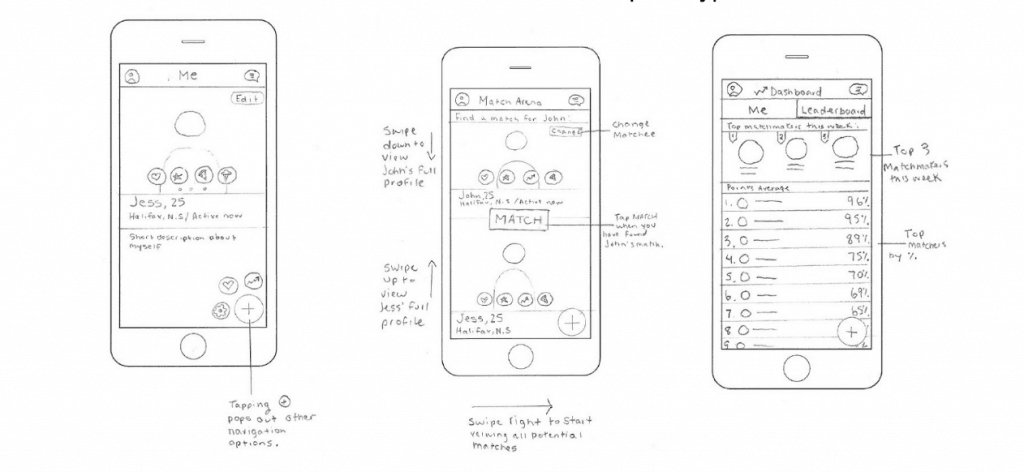
Step 1: Design the project goals and sketch ideas into the paper:
Many of you have heard that legendary thoughts are born during lunchtime and sketched on a napkin. Well, the very first goal is to represent the ideas QUICKLY. No color and no art.
Do not get into broad study at this stage. Just relax and identify about what is your product’s aim? How will it deliver a unique experience, and what is the selling point?
The basic approach of the application should amaze you as well as your audiences.
Step 2: Implement competitive examination:
It is crucial to carry a competitive analysis and ensure that your mobile app prototyping is convincing. You may conduct surveys to collect qualitative and quantitative data. It will help in the decision-making process.
As we all know that a compelling product will forever make money while others will remain in the App store’s graveyard.
Step 3: Identifying the key-functionality requirements:
After having a thorough competitive analysis, you would choose the best out of all and decide why this application stands out. Based on the research, you must choose what all features you must include in your app.
It is always a better thought to start preparing the list of must-haves, good-to-have, not-good-to-have features. As an experienced mobile development company, we would prefer to bring up the functionality in an application.
Step 4: Crafting the initial scenes:
The first initial stage is to design the rough sketches. It typically includes profile management, dashboard, and matches. Do not worry if the initial design does not work up to the finalization stage. After all, this is why we do prototyping.
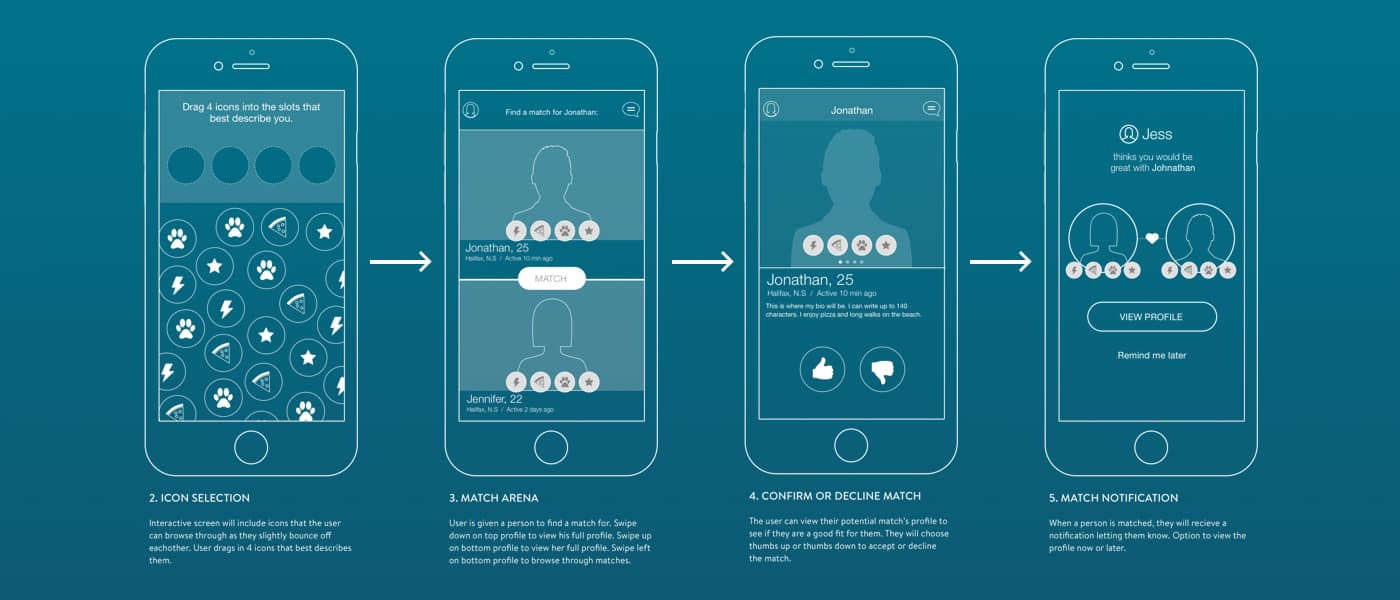
(Source- mindsea.com)
Step 5: Wire framing:
Well, now you can directly start wire framing. Wire framing can be referred to as the outline of the app that lays the foundation of the entire process.
Step 6: Creating prototypes:
To encourage interactions, transform your wireframe into a clickable prototype. One can use online tools for prototyping, which will give the feel of the real future of your application.
Step 7: Testing:
Here comes the time to test the “almost-finished” designed prototype. It is the process to gather some insights and identify the areas, which need improvement. We would suggest iterating the process and do it repeatedly until you have polished the application.
Step 8: Refining the prototype:
It is an obvious step to conclude the whole process of prototyping. After collecting the insights and discovering pain points, it is an opportunity to improve the errors.
By this time, you would have received the feedbacks from users and stakeholders, so start working upon them now.
Not wrapping up, but giving a piece of advice:
Crafting your company prototypes will make you productive, definitive, and innovative. Do not forget to build it with a purpose.
Best to embrace the tools available at your disposal to strengthen your skills.
Never jump on to the things and go step-by-step.
You can hire a professional designer for prototyping.
We at Infozion technologies have extensive experience in building websites and mobile apps from scratch. Our services might be helpful in such cases as well.
Stay connected!
So, you wake up in the morning and suddenly thought having a mobile app for your business. Well, you are overwhelmed and know that it is the best idea ever. You even know that your app can lure away many customers. So, what’s the next step?
The best part of having a mobile app is a good sign for the betterment of your business. The bad part is very few apps are successful. So, what divides a tale of success and debacle- some luck? The answer is yes with a lot of correct steps.
If you consider developing a mobile application, let’s explore our comprehensive guide step-by-step. We have broken down the complete guide into nine key steps of mobile app development.

(Source- titandev.net)
The nine stages of mobile app development:
Step 1: Validating the idea:
Before proceeding to the next step, the first thing is to ensure that you are not marrying the wrong idea. The plan is worth investing in time and effort.
- App objective:
Why do you require building a mobile app? Is it needed in your industry? Is your opinion worth satisfying the target audiences?
- Target audience:
Who are your potential customers?
- App USP:
What features in your app will appeal to the target audiences? How do you differentiate it from other companies?
- Opponent examination:
Who are your opponents? Do they have a mobile application? If yes, what solutions will be provided by your steps in a better way than them?
- App investment:
Any application you develop requires money, time, and effort. Are you ready to invest?
- App marketing:
After the launching of your mobile app, what are your strategies to promote it?
Step 2: Market research:
Now comes the crucial part of your mobile development journey. Market research or analysis gives you a clear picture of the actual demand of your target customers. The question arises, how to do market analysis precisely?
- Define your objectives
- Provide your analysis survey questions
- Identify the target audience engagement
- Speak to people about your ideas to every target customers
- Keep informative survey
- List your market competitors and do a desk survey.
Step 3: Build your apps wireframe:
Once your idea is ready and, market research gets completed, it is time to put your ideas into perfect shape. A wireframe is considered the blueprint of your mobile application. It presents the layout of your app’s functionality and features.
A wireframe is mainly a theory before converting it into practice. It is the reference or a guidebook for the app developers.
Step 4: Platform choice:
Let’s continue with the process of making a platform choice. Three options are available with the platform choice process.
- Native app:
The mobile app developers can use different programming languages to develop an iOS or Android mobile application.
- Cross-Platform App/ Hybrid App:
A single mobile application can run on multiple platforms built by HTML5. These get downloaded from all the app stores like native applications.
- HTML5 Web App:
It is an optimized mobile website that looks familiar to a mobile application.
Step 5: Development:
The next step is to give proper structure to your dream project after your mobile app design clears the usability test. The process includes the coding part and the actual realization of your application.
Step 6: Test your app and improve:
One must run a code review process. It helps us to know that there are no major bugs left in coding the mobile application.
Once you have reviewed the coding process, make sure to conduct a final usability test with other colleagues. You may also find out the bugs that you missed or overlooked. You may make the final tweaks to your product.

(Source- appcircle.io)
Stages of Mobile App testing:
Let’s dive into the various mobile app testing stages. Here goes the list:
- Documentation testing:
Documentation testing, also known as preliminary testing, comes at the beginning of mobile app development. In this phase, all the developers will find the inconsistencies and settle them before the actual development begins.
- Functional testing:
It helps to test the mobile application according to the industry requirements.
- Usability testing:
This part of app testing ensures that it offers convenient browsing to all your audiences, having an excellent user interface.
- UI testing:
It ensures that all the graphical requirements are up to the mark as per the needed specifications.
- Compatibility testing:
It ensures the optimal performance of your app according to the device size, version, screen size, and hardware.
- Performance testing:
It helps to test the consistency and mobile application reaction under a specific workload.
- Security testing:
As the name suggests, security testing allows checking the risk of mobile app hackers, virus, unauthorized access, and protection of sensitive information.
- Certificate testing:
It helps to know whether your app meets the standard requirements, license agreements, terms of use, and requirements of all the play stores.
Step 7: Originate a beta version of your app:
Originating a beta version of your app draws initial adopters. These adapters provide a lot of crucial feedback about the pros and cons of your mobile application. The early users’ experience will help the admin to understand the demand of their apps.
Step 8: Launching the final version of your app:
After going through the number of pre-launching steps, there comes the time where you officially launch your mobile application on the play store or apple store.
Step 9: Post-launch activity:
If people do not know about your app, then there is no chance of downloading it. To convince the people about your app and exploring it, one should make attractive advertisements and various ways of promoting it.
Never underestimate the power of social media. Use all digital platforms to promote your app.
What’s next?
The stages of mobile application development seem to be tedious, but it is worth rewarding if you do it correctly. We hope this comprehensive guide helps you in understanding all the aspects in detail. It is suitable for both startups and established businesses.
Good luck, keep building!
If you are looking for experts to guide you through the process, feel free to contact us.
Our Experts will connect with you in 24hrs to save you hassle and time.
Have you ever imagined that hundreds of web applications get created each month? The problem has shifted from “does your company need a web application?” to “how much does a web application development costs?” As we recognize that everything is shifting digital, industries must have a web application.
However, hundreds of articles provide different estimates for a web application development cost which does not give us a clear picture of the actual costs. Everyone wishes it to be so simple, like split-second estimates and time frames. Unfortunately, it is not that simple.

(Source- netleafinsoft.com)
Let’s dive into various factors that impact the web application development costs:
- Scope of project:
The scope of the project allows having the required amount of work to develop the web application. Fulfilling all the characteristics at once will increase the cost of development and impediments.
- Technological complexity:
Implementation of technical complexities will increase the cost of development, whereas regular features are not so expensive.
- UI/UX Design:
If you want to have a customized design to lure your audience, the web development costs will increase. On the other hand, standard templates and themes will need a less expensive UI/UX design.
- Deadlines:
A rush project always means higher costs. If there is a demand to meet tight deadlines, more resources get engaged in a single project. A deadline also means higher risk with effective management and increased costs.
- Non-functional needs:
One of the most non-functional needs for a web development company is the system’s capacity to handle per unit of time. Heavy load systems are always expensive.
- Web development company:
The geographical location plays a crucial role in deciding the web development costs. Web development companies’ charges vary as per the geographical location.
- Engagement model:
The fixed engagement model will increase the development cost, whereas the non-fixed price models will cut your development expenses.
Also, there is a distinction between the charges taken by freelancers and charges by a company like Infozion for web application development.
Compare Web development charge on company rates:
With the similarity in requirements, engagement model, and functionality, the web development cost will range from approximately $10,000 to $5,00,000+.
Here is the reason for the price variance:
- Geographical location:
The geographical location determines the prices of the web development professionals and the extent of their corporate charges. Companies’ prices differ as per the geographical location.
- Industry expertise:
Companies with highly skilled professionals who have expertise in narrow fields are always in high demand. The cost for these expert services becomes higher as they possess special knowledge.
- Company’s goodwill and respected awards:
You should know and be ready to pay more if you want to develop the web application with a company having goodwill, a qualified team, a suitable workplace, and a proven track record.
Well, let us have a look at the statistics regarding approximate web development costs by company sizes (for a mid complexity application- 1500 hours approximately)
Freelancers and startups: $15,000 to $38,000
Small companies: $38,000 to $1,00,000
Mid sized companies: $1,00,000 to $2,25,000
Large companies: $2,25,000 to $5,00,000
It is best to select experienced professionals, as they will benefit your company in the long run. Such experts are not significantly expensive in the market.
Cost evaluation by project complexity:
Now the next stage is to present the web development costs based on project types.
Basic (simple web app):
$5,000 to $15,000+
The basic simple web app includes basic functionalities, minimum content, and limited UI/UX. Examples are:
- Pre-defined template layouts.
- Small online catalogues.
- It includes additional widgets and features to the existing web apps.
Professional (mid-complexity web app):
$15,000 to $60,000+
The professional web applications include more advanced functionalities, a lot of content, and interactive features. Examples are:
- E-commerce stores.
- Market-based web apps
- Modules for existing web apps
Complex web apps:
$60,000 to $2,00,000+
The complex web apps have advanced features like audio/video processing, real-time synchronization, custom animations, third-party integrations, and complex back-end.
Enterprise web apps:
$2,00,000 to $5,00,000+
The enterprise web apps often developed for established companies have various custom features, individual UI/UX designs. Examples are:
- Automated billing systems
- Payment processing apps
- Call centres
- E-mail marketing systems
Innovative web apps:
$5,00,000+
The reason for the higher cost for these web apps lies in their title. These apps are made for large corporations having continuous large cash flows.
These are complicated web apps requiring constant innovation.

(Source- quora.com)
Throw away your doubts:
If you have your project costs estimated, but it does not fit your budget.
It is perfectly fine.
Do not make a hasty decision.
Instead, try to clarify every detail.
When you and the development company clarify the doubt, there will be two options left.
- Quit
- Try to negotiate the price.
On the other hand, if the price is unexpectedly low, try to clarify all the details.
Lower price catches attraction.
However, if you are not tempted to clarify your doubts, you might have the risk of overpaying the prices later.
Note:
The above estimations have approximate figures, and the costs may vary as per the company rates.
Closing summary:
We hope that now you have a basic understanding of various factors included in the web development costs, how the companies determine the prices, and how to clarify the doubts.
Moreover, if you want the precise cost estimation of a web development app, contact the companies directly.
At Infozion, we consider the project estimation cost as a chance to understand customer needs. In turn, we would know if the customers were satisfied with our way of communication, work approach, and prices.
If you are looking for experts to guide you through the process, feel free to contact us.
Our experts will connect with you in 24hrs to save you hassle and time.
Unless you are living under the caves or rock for the past twenty-five years, we bet you have seen all types of Google ads without even knowing that you are going through the advertisement. Maybe you were looking for a set of regular sneakers, and accidentally a discount on Google search led you to purchase a set of sneakers. Have you recognized that these were Google Ads?
Many of us will find it challenging to decode the process of Google Ads. However, the method gets much easier once you crack the ice gradually.
We will be looking at the:
- Different Google advertising terms
- Types of Google Ads
- How to boost sales using various formats
Let’s dive into the article.

(Source- constructionbusinessowner.com)
Types of Google Ads or Ad words:
If we talk about the various kinds of Google Advertisement, there are eight Ad Campaigns with Google Ads or Ad words.
- Search Ads:
It reaches consumers engrossed in your product or service with text ads.
- Display Ads:
It runs various types of ads across the web or emails.
- Video Ads:
It engages and retains the viewers on YouTube and across the web.
- Shopping Ads:
It promotes product listings with shopping ads.
- App Ads:
It will kick your app promotion across Google’s Network.
- Smart Ads:
It will approach your marketing intentions with automatic ads on Google and across the web.
- Physical Ads:
It will help the customers to reach physically to your business location.
- Discover Ads:
It will promote your business when the Google feeds opens.
Terms associated with Google Ads or Ad words:
Before starting with the explanation of Google Ads, we will first progress and understand the terms associated with Google Ads to learn more about how Google Advertising works.
What are Google Ads?
Google Ads is an advertising service offered by Google, formerly known as Ad words. It helps the people to advertise the businesses with ads on Google search and across the Google Network. It gets based on a pay-per-click (PPC) where the advertisers need to pay per click.
Bidding:
The process of Google Ads resembles an auction. If you want to advertise your business on Google, you need to bid the price. It means you need to select the maximum amount of money you are willing to pay for an advertisement. Higher bidding means better ad placements.
Ad Campaign:
A set of various ads having the same budget, location, targeting, and other user settings.
Keywords:
Keywords are the phrases that describe your product or service. Keywords help us to determine where and when your ads will appear.
Conversion:
A user performs the action you wanted, leading to conversion. (Forming a buying, signing up for a newsletter.)
As you will start running the ad campaigns, you will learn more about various other terms. For now, the above terms are sufficient for knowing the basics of an ad campaign.
Varieties of Google Ad campaigns:
Now, if you are familiar with Google Ads terms, let’s dive into the different Google Ad Campaigns and understand them in detail.
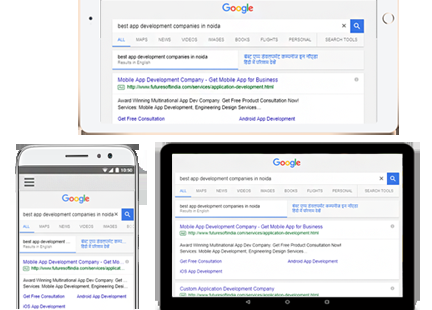
Google Search ads:
It attracts people searching for your products.
Google search ads are text ads that appear to the potential targeted customers on the Google search engine result pages (SERPs). These ads either appear on the top or the bottom of the organic search results.
Best used for:
Getting in front of the people who search for your product or business.
(Source-bluecorona.com)
Display Ads:
It generates brand awareness.
Display ads are different from search ads. Search ads help to find potential customers with the help of targeted keywords. Display ads are image-based ads that allow targeting the customers who are looking for similar types of products.
Display ad campaigns generally appear when you are browsing your favorite websites or even inside your email accounts.
Best used for:
Increase in brand awareness and reaching potential clients early in buying cycle.
Google Display Network:
Google uses the Google display network to show your display campaigns to potential customers. It is a network of more than two million web pages, apps, and videos.
You can set the target audience and the time of display ads to be shown.
The preferences are set according to the audience’s gender, age, and interests.

(Source- youtube.com)
Video Ads:
It helps to get in front of your target audience.
Since YouTube relates to Google, you can target your potential audiences on YouTube based on the algorithm. With 2 billion users online, you have a huge audience to target.
Your video ad campaigns are placed before, during, or after the video and in search results.
With the help of video ads, you can utilize demographic targeting and reach your ideal customers as per their age, gender, and interests.
During the video streaming, YouTube allows skipping the videos. It still has a five-second timer, which is enough to deliver the right message to your audience.
Shopping ads:
It helps in advertising to the shoppers who are ready to buy.
Google shopping ads are product-based ads. They are designed for product searches.
Shopping ads provide information about a particular product to the customers such as product title, price, store name before visiting the website.
Best used for:
Boosting the E-commerce traffic and increasing sales.

App ad campaigns:
It increases your app installations.
Are you having a mobile app for your business? If yes, you can sell it with Google’s most extensive network like Play store, YouTube, Search engines, and Google Display Network.
Best used for:
Creating ads to encourage the target audience for app installation.
BONUS: Discovery Ad Campaigns:
Discovery ads are a new type of Google ad that helps reach your target audience with the help of YouTube Home, watch next feeds, social tabs, E-mail accounts, and much more using a single ad campaign.
Wrapping up:
Congratulations, you have read everything that needs to be understood while working or knowing about ad campaigns. With different types of ad campaigns available, you must choose the ad campaigns wisely with proper format.
Last but not the least, you should check Google Analytics to see how well your Google ad campaigns are performing, and you may make the changes.
If you are looking for experts to guide you through the process, feel free to contact us.
Our Experts will connect with you in 24hrs to save you hassle and time.