 Infozion Technologies LLPInfozion Technologies LLP




Migrating From Drupal 7 to Drupal 9 – What You Need to Know

Migrating From Drupal 7 to Drupal 9 – What You Need to Know
Launched on 3rd June 2020, Drupal 9 brings a powerful and highly consistent platform for businesses to encounter innovative digital experiences. With the older versions, upcoming end-of-life, enterprises have started migrating and charting to shift from the existing version to the Drupal 9 version.
As we already know, Drupal 7 will officially withdraw its support from November 2022. Does it seem scary? Well, you are not alone in this migration process. Businesses should consult experienced Drupal development agencies for the complete migration process.
Let’s dive into the following blog for more details:
If you are still on Drupal 7, KEEP CALM AND CARRY ON:
Businesses need not panic if it is still on Drupal 7. The Drupal community will support officially till November 2022. After that, it will extend commercial support for additional five years or until 2025. Thus, organizations can begin their upgrade process as soon as possible to prepare and plan.
The Drupal community has outlined a list as to what to expect from D7 to D9 transition:
- No new features for D7 sites.
- No automated testing.
- No security support- no patches, no bug fixing, and no security advisories, leaving your websites vulnerable.
- Flagged as unsecured while integrating with 3rd party tool.
Want to continue with existing D7 sites? Explore the options still available:
Have a look at some of the existing options available:
- Continue with unsupported D7:
D7 sites will continue with the work even after its end of life. However, there is a twist to this. There won’t be any security support from the Drupal team. The lack of security support will lead to website compliance issues, especially with sensitive information.
- Partner for Extended Support (ES):
Businesses not opting for migration can enroll for the D7 ES program and partner with the Drupal Association. The partnership involves disclosing all the D7 security vulnerabilities to the vetted vendor and fixing them. However, the ES program is available only till 2025, post that businesses have to either platform to the latest versions or move to other CMS.
- Shift to different CMS:
Backdrop CMS:
The backdrop has a built-in upgrade path for D7 websites. If you plan to remain on the traditional website without any upgrade, backdrop CMS is a good bet. However, in the future, if you plan to shift to D9, migrating to backdrop CMS is not a good investment as there is no migration path from Backdrop to D9.
Other CMS:
D7 sites are compatible shifting to other CMS platforms outside the Drupal universe. WordPress offers plugins to simplify the move. One can also make custom CMS. However, there is a moderate and heavy investment of time and money while migrating.
Moving from D7 to D9:
Once you decide to migrate from D7 to D9, you can approach in two ways:
- Migrate directly from D7 to D9
- Migrate from D7 to D8, then to D9
The journey from D7 to D9:
With Drupal users holding the majority, users would want a direct up-gradation. Upgrading from D7 to D9 will cost the same as upgrading from D7 to D8 to D9. Yes, you heard that right!
The primary reason is D9 is a minor upgrade in terms of functionalities from D8. However, a direct upgrade from D7 to D9 is a whole different thing.
The second reason is backward compatibility. The Drupal community takes time to create enough modules compatible with the D9 version.
The journey from D8 to D9:
If you are on D8, updating to the latest D9 version is seamless. Along with core upgrades, D9 comes with Symphony 4 and 5. It will further reduce the time and effort.
The update from D8 to D9 is the removal of Deprecated Codes. One can find these codes in the modules integrated with the site.
Wrapping up:
If you are still on D7, we hope you have enough information to consider migrating to D9 as the next logical step. Once you opt for a D9 upgrade, consult the expert Drupal development agency for a smooth migration process. Infozion technologies would be happy to assist you with the entire migration process.
As we already know, Drupal has served big brands featuring increased functionality websites as one of the most prevalent CMS platforms choices for various enterprises. Drupal 7 does not cater to the current and emerging needs of the enterprises due to disruptive market trends. Businesses need to evaluate their move from Drupal 7 to Drupal 9, with its end-of-life in November 2022.
Essential tips for Drupal 9 migration:
Organizations need to choose one option out of the two options available.
Option 1: Migrating directly from D7 to D9
Option 2: Migrating first from D7 to D8 and then from D8 to D9.
Option 2 is the ideal path for organizations willing to migrate to D9. Migrate to D8 after fulfilling the pre-requisites and workflows for content migration with the help of migration scripts.
Choose from among the two approaches to get it done:
Option 1: Build an entire new Drupal website from scratch
Option 2: Build a new Drupal 8.9 site and migrate the existing content from D7. Then upgrade to D9.
Crucial steps to follow:
- Before undergoing the migration plan, organize architecture for source and destination sites.
- Create an Excel file for the migration plan.
- Rely on the migration planner to get queries from the database.
- Allow site abilities to migrate with the content automatically.
- If your existing site has a lot of custom code, choose either standard contributed fields or a custom migration strategy.
- Use migration processors and add Drush support for non-core fields.
- Investigate all the platform requirements before migrating.
Planning Strategies used for Migration to D9:
Once you decide to migrate from D7 to D9, there are some considerations taken into account, which are as follows:
- Ensure thorough preparation:
Undertaking a migration process from D7 to D9 does not involve a lot of complications. Update Drupal 7 to the latest version along with its extensions. Make sure to have a backup ready of the present site before starting the migration process. The fresh installation should enable migration modules and stability.
- Content structure and modules identification:
Identify the content types, structures, and modules used in the migration process with site configurations. Install and enable all the modules, as they are not the same as in previous versions. The migration scripts mainly depend on the data used and the content catalog. After this, map the content types to the new version.
- Using Drush Method for D8:
Use the Drush method for data migration with a prompt status delivery message. Define the database connection and import data from D7. Set up a migration process with the help of Migrate Manifest Module. List in random orders but execute them based on perceived dependencies.
- Upgrading site to D9:
Update the contributed modules to D9 themes after migrating to D8. Upgrade to D9 with the help of contributed modules with patches when needed. Ensure the code is compatible with D9. Remove any deprecated APIs and use composer from D8 to manage dependencies.
- Skillset needed for migration process:
The migration process depends on a team of expert Drupal developers. The migration will work if they are capable of upgrading themselves. Use a Drupal development agency such as Infozion technologies that understands your workflows and has prior migration experience.
- Time and budget constraints:
Set out a budget and relevant timeline for the migration process. Consider the factors such as business goals and opt for phased upgrades. Assess the design aspects and figure out whether the site promises a great UI/UX experience or not.
- Check for feature updates:
Before allowing a nod for the migration process:
- Perform a comprehensive audit
- Assess the content types fit for removal
- Utilize futuristic taxonomy
- Merge content types during the D9 upgrade
- Checking dynamic front-end features
- Assessing the site leading to rigorous checks and balances
Wrapping up:
The migration process involves a lot of phased approaches starting from a sound migration plan to the experienced skillset team. However, once you have decided to opt for D9, you need to have an experienced team of Drupal developers to carry a smooth migration process. Infozion technologies is one of the leading Drupal development agency that will help your business and organization with the Drupal Migration Process.
The software community thrives on new upgrades and updates that enable features, functionality, performance, and usability better than previous versions. The product becomes more efficient and secure if we update to the latest version of the technology.
Drupal is one of the most popular open-source CMS, offering regular updates after every six months. To enjoy the latest functionalities of the CMS, users need to upgrade to the newest version.
If you have your website based on Drupal, what is the latest version we can update? Drupal 9 is the brand new version, fresh like a cookie from the oven, released in June this year. Unlike previous versions, the update for migrating to Drupal 9 is like upgrading to the entire new version release.
If you are on Drupal 7 and looking to migrate to Drupal 9, we will discuss why you should update to Drupal 9?
Current scenario of Drupal 7:
Does your website is based on Drupal 7? If we talk about statistics, currently, Drupal 7 is used by more than 7,50,000 users across the globe. It is not the latest version and has official support till November 2022. The Drupal creators extended the support by one year by looking at the current pandemic situation. Initially, the support was going to end in 2021.
End of support: what does it mean?
Security considerations:
Keeping the overall website security and customers’ data is crucial for any business organization. For having a secured website, one needs to apply for security updates. No more security updates will get released after the end of support. It means the websites will have more vulnerability for cyber attacks.
No smooth process:
The end of official support means no bug fixes and no improvements. Due to this, some functions on your website won’t work smoothly. It will drive away potential customers.
No further development:
The end of support will not lead to any further development for your Drupal 7 version.
Reasons for upgrading from Drupal 7 to Drupal 9:
Let’s dive into the benefits of Drupal 9:
Easy upgrades:
Long updates are gone. All you need to do is move forward from the D7 version, and all the upgrades are as quick as possible. All this is possible due to D9’s backward compatibility with D8.
Better security:
D9 has cleaned the outdated code and uses the new version of PHP, which helps in protecting the websites from cyber attacks and offers better security.
Faster:
D9 will improve your website performance because of the integration of third-party libraries and components inside. The design of the new architecture allows creating superfast website experiences with the help of integrating JavaScript frameworks.
Accessibility to all audiences:
The D9 version is accessible to every audience, even with disabilities. The D9 front-end theme Olivero is an accessibility masterpiece.
Smooth editorial experience:
Content editors will love the admin dashboards in their D9 websites. All thanks to the media library, configurable toolbar, and quick edit feature, and much more.
Multilingual:
Earlier, D7 websites cannot imagine the multi-language capabilities that D9 has provided. Adding languages to D9 websites is now like a breeze.
Mobile friendly:
The Drupal team has seamlessly provided mobile users a boon, as the websites are mobile-friendly.
Do you want to upgrade to D9? Upgrade with us:
We would recommend first upgrading from D7 to D8 and then to D9. Our expert Drupal developers will upgrade to D8 and ensure that your code is clean without any outdated elements. After fulfilling these requirements, our developers will instantly transfer to D9.
Our experienced Drupal development team will perform your Drupal upgrade quickly. Contact us now!
With the increase in technology, every section of society is dependent upon digital devices for online activities. Your CMS must meet the needs of the recent trends as the users and students are increasing every year.
Here comes the thought of knowing which platform is the best for building a university or educational website? Drupal website is the best solution for making an educational website. Drupal is an open-source all-in-one CMS platform that develops highly scalable websites. The team will ensure the flexibility, security, and robustness of the Drupal CMS that will enable technology-driven learning methods.
It offers secure coordination with fewer efforts and time that helps in creating higher education websites. If you doubt why we should choose Drupal over other CMS websites, check out this article. We will be discussing why Drupal is a perfect fit for educational websites?
Drupal: a perfect fit for educational institute websites:
The manual auditing of text, videos, and images is pretty monotonous. Apart from that, the educational institutes have tight budgets and limited faculty resources for establishing websites. Thus, Drupal has the supporting standards starting from visitors understanding web pages to editors adding tags quickly.
Open-source CMS:
Drupal is an open-source CMS that allows educational institutes to create highly scalable, secured, and flexible websites for students and teachers. The process of distance education seems effortless with the help of Drupal websites.
Multi-site and Multilingual:
Educational websites involve a holistic approach that demands a sister domain for the development of students in various sections. Drupal offers flexibility and fulfills the demand for multi-site management for educational institutions. It is possible to share the site content with the Domain Access Module that helps in configuring the user and content settings. Drupal allows creating a joint code base where more than a hundred languages can get localized.
Easy to develop and customize the content:
Drupal websites for educational institutions are easy to develop. Drupal has functional tools that allow creating and managing multiple content types with minimal coding. Personalization and customization of content is also one of the key features of Drupal CMS.
Access rights:
Universities can use Drupal and develop ERP Software to create accounts for different categories of users. You can create access rights for the data on the website, which means that what teachers see will be different from what students see.
Mobile friendly:
If we count on the number of smartphones a student or a teacher has, everyone will have it. If any educational website gets built on Drupal CMS, the websites are mobile-friendly by default. If you want the most out of it, you need to hire an expert Drupal Developer to do the job for you. Infozion Technologies is the right choice for your Drupal Development needs.
Wrapping up:
Universities and educational institutions need to promptly respond to the demands, as higher education is vast and intimidating. Fortunately, the development of educational websites with the help of Drupal CMS has multiple functionalities. It allows users and students to manage the institute’s main page from a single place. It is always possible with the help of access rights given to content independence to each department.
Do you need to develop an educational website? Hire Drupal web developers from Infozion technologies that have master skills and are highly proficient.
As we already know, the Drupal team will officially stop supporting the Drupal 7 version. Drupal’s founder, Dries Buytaert- has stated that support will end for the Drupal 8 version simultaneously. Thus, it is critical for thousands of websites to migrate to the later versions of Drupal. It will ensure a scalable, secure, and robust infrastructure.
Upgrading to the latest versions will bring quick search compatibility, usability, and compliance. It bestows a bundle of great features for website builders, administrators, an object-oriented backend, and a twig-based templating system.
Considerations while upgrading to Drupal 9:
- Content workflow defines various workflows.
- Support for multilingual capabilities.
- Improved page view performance
- Faster page loading
- Authorized front-end freedom
- API- First approach
Drupal 9 is the most innovative version in Drupal history. It is the modest version of Drupal 8.9.0 with the up-gradation of third-party dependencies.
It is also a high-quality choice for the formation of integrated digital frameworks.
In this article, we will help to understand
Some of the new features embodied in the Drupal 9 version and why do organizations need to upgrade?
What differentiates Drupal 9 from Drupal 8?
In simple terms, think of Drupal 9 as the reliable, faster, and easy-to-use version.
In Drupal 9’s upgrade, there are not many significant schema changes that require a complicated upgrade. All Drupal modules use object-oriented programming and YAML, including Drupal 9. As long as all the project components use the updated code, the transition phase from Drupal 8.9 to Drupal 9 is not complex.
The core dependencies that run on Drupal 9 are:
- PHP 7.3 as a minimum version
- MySQL 5.7
- Drush 10
- Symfony 4
What’s new in Drupal 9?
The security support provided to the Drupal 9 version is the fundamental advantage to upgrade. Furthermore, it also offers effortless features that are:
Backward compatible:
Drupal 9’s is compatible with its predecessor version- Drupal 8. Thus, it is reverse compatible. Unlike the case with D7 sand D8, D9 can use modules, configurations, and data created on D8.
Faster and smooth performance:
D9 has extended its pillar support for responsive images. It displays the best mobile pictures with faster loading and better performance.
Cleaner codebase:
D9 has removed the support for deprecated code in D8. Thus, it guarantees that the code marked as deprecated is no longer supported.
New versions of Symfony and Twig:
Drupal community launches Twig 2.0. Also, Symfony 3 gets replaced with Symfony 4 and 5 in the D9 version. The upgrades result in advanced performance, improved development experience, and better security.
Panelizer gets removed and replaced:
In D9, the panelizer is removed and replaced with the layout builder and the contributed module of the moment.
Headless CMS:
D8 and D9 have API-first approaches. D9 uses headless CMS to enhance user experience with the front-end, having a JavaScript framework.
Reasons for upgrading Drupal 9:
- The Drupal security team will soon cease to provide security advisories, wavering the websites and cyber security.
- The D7 and D8 versions will get flagged as insecure in the 3rd party scans.
- Leading service providers will also withdraw their support from D7 and D8.
Wrapping up:
Drupal’s migration process will bring relief for the sites employing older versions. The latest version can fulfill the high-stake development process vigorously. Would you like to have a try?
The key to achieving a smooth transition process is to plan a migration process with deadlines. If you are looking for a smooth migration/ up-gradation process, Infozion technologies is the best choice.
With Drupal 7 and 8 reaching the end of their lives and Drupal 9 all set to release their new versions- the crucial question that pops up in our mind is whether you should wait or upgrade to Drupal 9?
Instead of pondering over the reasons as to why upgrade to Drupal 9, organizations must start figuring out their approach towards Drupal 9.
Let’s dive into more details and understand how to survive the Drupal 7 and 8 end-of-life.
Drupal 9: Reasons to migrate:
With Drupal 7’s end-of-life, Drupal’s official team will not extend any support. In simple terms, contributed modules and themes won’t get any maintenance apart from exposed security loopholes, affecting the recantation of the downloadable release of the projects.
Drupal 7 and 8 end-of-life:
End-of-life means the Drupal team officially withdraws the support for older versions. With the launch of Drupal 9 in the last year and Drupal 10 set to schedule for release in June 2022, end-of-life is quickly approaching Drupal 7 and 8.
One might get a mini shock as Drupal 8’s end-of-life will occur before Drupal 7. In most cases, the transition from Drupal 8 to 9 is insignificant. Another reason is Drupal 8 majorly depends on Symfony 3. Symfony 3’s end-of-life was on November 2021.
How will organizations get impacted?
Drupal is one of the large content management systems with open-source and robust security models.
- Drupal has a dedicated team of security professionals that review core and contributed vulnerabilities.
- After identifying the possible issues, the Drupal team gets notified and quickly fixes the code.
- After code fixing and announcing, a patch gets released to the community.
- Drupal sites get an automatic notification that they need to upgrade.
With Drupal 7 and 8 end-of-life, there won’t be support from the Drupal team, even for critical security issues. The contributed modules won’t get reviewed and tested.
So, what do you need to do next?
Without taking active steps to protect your websites, you are vulnerable to a security breach. Hackers and hacking groups are waiting for the official support to end. They can use security exploits to access the websites.
We advise our partners and clients to follow these steps:
- To ensure continuous security support, one can develop an internal plan to monitor future Drupal 7 and 8 security releases.
- It is time for reassessment on using the web if you are still on Drupal 7 and 8.
- Take the help of an expert development company like Infozion technologies. We will help to reassess the website plans and determine an effective digital strategy.
- After identification of secured platforms, plan and execute the migration process.
Upgrading to Drupal 9 is more than just security:
Drupal 9 has out-of-the-box features that allow you to build modern digital experiences.
We can say Drupal 9 is a box of innovation.
Best of Drupal 8:
Drupal 8 has improved authoring experience with Layout builder, Twig templating engine, and build-in web integrations. All these features are carried forward to Drupal 9.
Automatic tools:
Ease of use is Drupal’s topmost priority. New front-end themes and automatic updates are among the intuitive tools of Drupal 9.
Future upgrades:
Upgrades on Drupal 9 are automatic, and one need not platform as new versions get released.
Prepare for an upgrade of Drupal 9:
The upgrade comes with difficulties. As you prepare for Drupal 9’s upgrade, prefer the best development agency such as Infozion technologies for a steady migration path to Drupal 9.
Undoubtedly, Drupal is a widely used open-source content management system. However, the Drupal 7 version’s life is coming to an end, officially released on 5th January 2011. Now, what do we mean by the end of life? End-of-life means the official date the core Drupal team stops supporting a particular version of the content management system. November 2021 was the initial date for Drupal 7 end-of-life. However, the Covid pandemic that hit the businesses and their budgets, the Drupal team decided to extend their support till 28th November 2022.
The most awaited question that comes is- are you still a part of Drupal 7? If yes, what next? Have you given a chance of thought about the risk after its end-of-life? If not, you should think about it right away.
In this article, we will discuss-
Is it safe to stay on Drupal 7 after its EOL?
How protected is it to stay on Drupal 7?
This particular segment will help you to figure out whether you should adhere to Drupal 7 or not? But the difficulty arises, how will you perform this choice? Business organizations need to estimate the ongoing and up-gradation cost in comparison with the current state of things. Once estimation gets completed, business leaders will get an opportunity to project the break-even point for the up-gradation. Also, the projection of future security threats cost won’t get predicted as nobody knows how much will it cost in the future.
If the business organizations decide to stick with the Drupal 7 version, they must get aware of the risks.
Let’s dive into some of the risk factors:
Risks after Drupal 7 EOL:
Some of the common risks are as follows:
Security threats:
Websites based on Drupal 7 won’t get any security support for the core issues or contributed modules. Site maintainers will need the majority of their time to search security loopholes and fix them. If there are various contributed modules in the Drupal configuration, the risk gets compounded. No doubt, business organizations might hire a development agency allowing a helping hand to resolve the Drupal seven issues.
One of the advantages to upgrade from the 7 to 9 version is that you will get all the security updates and features.
Integration threats:
Another risk that accompanies the security threats is the integration threats. It will be difficult to maintain the status quo as the key integrations will start to fail. Organizations need to update the module or make a custom module to keep the integration work ongoing as the current version won’t be supported by the core Drupal team.
Functionality threats:
The Drupal community will eventually reduce the amount of activity spent on the core modules after their end-of-life. As a result, there won’t be any free updates. You will end up struggling to fix the bugs or hire an expert agency to work on behalf of your website. It will end up resulting in additional costs.
What’s your pick?
As mentioned earlier, it is difficult to predict a particular figure cost for an upgrade investment. However, we can understand the complexity of the business case based on the existing Drupal 7 solutions. We can tell you the complexity level, the number of modules used, and the nature of integrations.
If you are looking for an upgrade or want to stick to the existing version of Drupal, Infozion technologies is the correct place to solve your queries.
With the vacations knock on your heels, this can be the instant to reinforce your Local SEO marketing for the season. Clients will close the doors to achieve purchases made well before the holidays and this will be key to optimizing the local SEO of your business in advance.
you’ll be coated by the subsequent Local SEO tips for the vacations that are ready by the team of digital marketing gurus.
# 1 Set your vacation hours:

Do you know that a mobile search for “store hours” arises throughout December and touches the peak on Christmas day? If you do not intend to change your store hours, it is still important to configure your holiday hours for each holiday.
If you do not configure your hours for the holidays, sites like Yelp and Google will alert customers that they may be mistaken for the holiday. The suggestion is to schedule your vacation hours immediately – before it is too late.
How to configure your vacation hours on Google My Business:
1) Log in to Google My Business.
2) If you have different locations, open the location you want to manage.
3) Click on the section on special hours.
4) Click Confirm the next hour of an upcoming holiday. Click Different Click Add New Date.
5) Key in opening and closing times for that day.
6) Glide the circle to “off” to indicate that the location is closed throughout the day.
7) If you are open 24 hours, select 24 hours from the menu that opens and select the one that emerges.
8) If you close the hours after midnight, be sure to set them correctly.
After entering all your special hours, choose Apply. Your special hours will only display to customers on Google for the allotted days.
To update the hours for your entire locations you can employ a spreadsheet following these instructions.
How to adjust your holiday hours on Yelp:
1) Log in to Yelp for business applications.
2) Go to Business Information and choose a special hour.
You can close your business for the day or open it at the time window. Special hours are set up on a daily basis, so include every day where your operating hours will typically be different from the hours listed on Yelp.
Setting your vacation hours for each holiday is important even if you do not intend to modify your store hours.
# 2 Increase your local pages for the holidays For Local SEO
82 percent of local searches are unbranded. People are looking for things like holiday hours, holiday-specific items, and holiday deals at this time of year. Your local pages are an ideal place to gather all this information.
By putting holiday information on your local pages, your brand will facilitate more web, local, and voice searches.
In fact, in the last 2 years, “I have” + “on-sale” mobile searches have increased by 250%. When users search for terms like “I have Black Friday sales”, Google scans your local pages to find the appropriate keywords and then uses that information to rank their local store.
This is a great time to rank for seasonal keywords that won’t last a year.
# 3 Be as communication and as accessible as possible:

Open communication lines about people-friendly features offered by your brand and how many of you work as:
- Local business listings
- Website
- The form
- Social channel
- Texts / messages
- Radio, local news, and TV media
- Phone On Hold Marketing
Google My Business Listing, in particular, is an interface that allows any customer to respond to who-where-and-why-if your business is handling them correctly, whether manually or by software Such as through stocking locally.
Anywhere a customer can discover everything you have to offer, be precise, and with lots of information about location, identity, hours of operation, culture, policies, and offerings.
From setting special hours for each of your locations to adopting Google Post to microblog holiday content to reassuring your social profile and website, advertising your USP, which is your highest communication effort in the current year I do.
In addition, make sure you conform to Google’s mobile-friendly criteria, and your website complies with the ADA so as not to leave any customers. Provide a quick, intuitive, and inclusive experience to maintain customer engagement.
With the need for social disturbances epidemic, use the Internet as your workhorse to connect and provision your community to the maximum extent possible.
# 4 Accept local e-commerce and product listings For Local SEO :
At the local business level, adopting a primary e-commerce function before the holiday season can also make a significant difference, if you can discover the most preferred methods of delivery. These may include:
1) Buy online, pick up curbside
2) Buy Online, Choose In-Store (BOPIS)
3) Online purchase for personal home delivery via internal or third party drivers
4) Buy online for mail delivery
There is a vast comparison to common e-commerce solutions, including free trials, and the E-Commerce column of the Moses Blog constitutes a free library of professional advice to maximize digital sales.
Keep your products everywhere. Remember that last April, Google stunned everyone by offering free product listings and they recently secured a pointy device, which allows you to convert scanned barcodes into online inventory pages.
In addition, in mid-September, Google took its next major product-related move by adding a “pass” filter to Google Shopping, taking you closer to the search engine to turn it into a source for real-time local inventory.
Adopt a public safety protocol that reviews GatherUp’s research, asking consumers to get their list online, find the easiest ways to get a purchase from their storefront in the hands of customers, and more of your efforts. More Q4 can make way for profit.
# 5 Stand apart from the crowd:

When talking about differentiating yourself from your competitors, keep in mind that unique content cannot just build your holiday sales.
People will be more likely to bring their business to their website if the site itself is simple to use and attractive to watch.
Sure, you’ll need some substantial, customized content on your pages, although if the pages themselves are crowded with text, ads, Flash content, or your JavaScript issues, it won’t load fast or look attractive.
The data demonstrate that problematic webpages are generated as a result of higher bounce rates and markedly lower sales.
Rather, keep your webpages comparatively simplified, with visually bright images that facilitate communication with your clients by your written content.
The adapted content must be precise and visually segmented to form a hierarchy of words and pictures.
Users should immediately know where to find the most useful information, and each successive element must be in contrast to the element closest to it to support the smooth flow of content sections.
A primary example: Suppose your holiday decor store is for the fourth of July.
You may want to employ a large image on your homepage that displays an assortment of patriotic and picnic items you have presented for sale.
Then some visually contrasting buttons are shown which users can click to enter specific categories of decorations.
Additionally, remember to update your website with holiday-relevant pictures and different displays. Revealing to the purchasers you’re operating with within the current season can build them feel higher to buy from your store.
Keyword-optimized content near these visuals can use pleasant, concise language that lets users know what is present and also adds them to add items on your list.
Just remember to make things easier.
A narrative-shaped item of content is neither necessary nor desired. Customers want to know what you have and why your portal is the best place to buy it, be it for your wide product selection or competitive prices.
The conclusion
Going up, there are many steps that you can adopt to do local SEO during the holiday season.
The steps vary administratively, such as adjusting inaccurate NAP information and updating your portal with holiday themes, with more in mind, such as how to get more prominent among your competitors and to visit your store Securing web shoppers for.
If you like, you can earn your own PR side by quoting (with no permission) some practical Google reviews related to your business on your portal and positive feedback on any negative feedback and online criticism.
Make sure everyone associated with your business knows that you care about compliments and complaints.
Are you running a small business? Say, a motorcycle mechanic shop, music shop, restaurant, hardware shop, etc. If you are, you can already feel how important local customers are to you. If you agree, then you should also know that when it comes to digital marketing, local SEO is an important element that you should not miss.
Local SEO is a powerful strategy that locally operated small businesses can use with just a few clicks to get by their local customers. If you are looking for or searching for potential customer services or products online, local SEO can help your small business appear without even a commercial website.
We mention local SEO tips to support your business in 2021:
The success or failure of your local SEO can be decided by this fundamental step. The first thing you need to do is what are the most relevant phrases and keywords related to your business. Be sure to include all locations, as well as products or services. When it comes to places, be sure to use any words or phrases associated with your area. This means that you have to keyword not only your city or city but also your region or country.
Create a GMB (Google My Business) profile
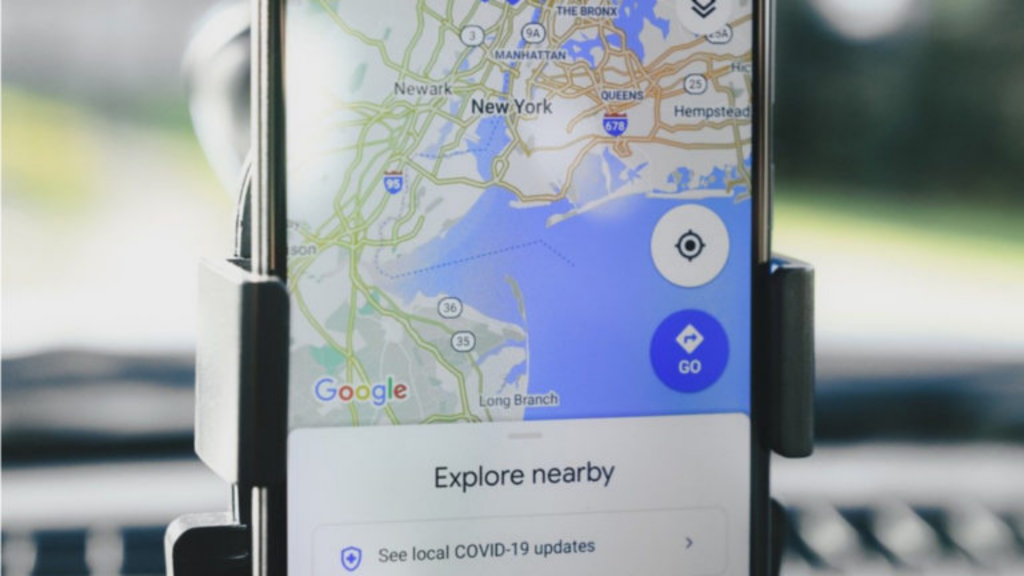
Google What is my business? This is a platform where locally operated small businesses can engage their customers on Google Maps and Google Search for free. Note that this is more than just a simple business listing. When you already have a profile on GBM, you can connect with customers through booking, follow, call, and click. You can also add photos. Remember that when filling in your details, it is better, so fill them in your account dashboard as much as you can.
Match your NAP (name, address, phone number) with your website on Google My Business
If you are improving your website’s ranking in the local search engine for your goal, place the same NAP on GBM with your website. Doing this will help search engines collect accurate data about your business, especially when you leverage a citation creation service from an SEO builder or any other SEO agency.
Maximize Title Tags and Meta Descriptions
When it comes to strengthening your on-page SEO, one popular factor you should consider is the page title tag. People can easily place it at the top of their browser tab. This allows users, including Google Bots, to get information about what they can expect after clicking a link to your website.
When it comes to title tags it is important to remember:
- In your page description, always include the target keyword.
- Keywords must be placed at the beginning.
- To achieve full performance on SERP, do not extend the length of the description beyond 60 characters.
- If possible, include the brand name.
The short information snippet is then referred to as the meta description. It also appears in SERP. Following are the things to remember about meta description:
- It should be kept fascinating, communicative, and unique.
- It should contain only 140–160 characters.
- Include your target keyword.
- Keyword stuffing should be avoided.
Optimize for voice search
These days, voice search is happening fast in many homes. Speaking by children, youth, and grandparents alike, this new discovery brings comfort. If you want to improve your local SEO, optimizing content for voice search is highly recommended. Observe how people make their inquiries while talking to their devices; This is how you optimize for voice search.
When typing topics of interest or questions, people usually write short keywords. However, they do the following when they are at liberty to voice their questions:
- Ask in the appropriate question format.
- Write long-tail keywords.
- Also, consider their equipment as a helper or a friend.
- Use a conversational tone when talking.
Explain search intent using more question words, including when, when, how, where, what, and why.
Use appropriate schemas
What schema markup does is help search engines understand information that is location-based structured like your NAP and others.
You should use the appropriate schema based on your local business type. The three supported formats when writing schema points for websites include RDFa, Microdata, and JSON-LD, the most recommended format.
Final Thoughts
Search engines, such as Google, use IP addresses and geolocation (location-based data) to provide the results that matter most to their end-users. This means that you can improve your online visibility in local search results by following the local SEO tips above to optimize your website.
You may have heard that Site Structure is important and has a great impact on how your company considers SEO. Since these two words are interlinked and have great importance in the digital world, in this article we will focus on the basics and understand why it is important to have a good site structure.
What is site structure?
In short, site structure means how you organize the content of your website. This is related to the way your content is grouped, linked, and presented to the visitor. If you do it well, it benefits you in more ways than one. This ensures that users find their way to your website easily and that Google (and other search engines) can better index your URL.
In today’s competitive world, having a properly structured site is an important component of your SEO strategy. It shows Google which posts and pages of your website are most important. Simply put, it affects which articles will be at the top.
As a marketer, you need to give what actually you visitours wants easily, simply and quickly. Your website should be easy to navigate. All this ensures that your users are interested in and engaging with your website, and ultimately, conversions.
Why do you need it?
As mentioned earlier, having a good site structure means that people will find you easily as your SEO ranking will improve. As your website and the number of pages/posts on it increase, it gets disorganized. There is a chance that your website contains too much information that is not organized. Therefore, you should organize your content in a way that helps your visitors and Google find out what they are looking for. If you fail to organize your blog, your products, your stories, and your content neatly – it will be lost.
Why is site structure important?
1. WebSite structure helps to search engines and increase crawling:
 Search engines need to understand which parts of your website are most essential to your brand. Having a structure helps search engines like Google understand what your site is. Google crawls websites by following internal and external links – and it helps determine relationships between different pages. Site structures are guides for Google and therefore super important! In short, it helps crawlers that crawl your website to search for important pages and show them to the concerned audience.
2. This enhances the user experience:
 Users generally prefer sites that are easy to navigate. The site structure does this. When your structure is clear, your audience can find what they are watching without any hassle – and this leads to conversion. Users buy your product, subscribe to your mailing list, and connect to your website when the structure of your website is clear and clear. This way your site will perform well and get an additional boost when it comes to SEO ranking!
3. It provides site links to your site:
 Site links help your SEO ranking. Their purpose is to increase the navigability of your website and to point users to the most relevant information on your website. It also enhances your brand’s reputation and improves user confidence. Did you know that the Google algorithm rewards websites with site links? By not having relevant site links on your website, you can afford your targeted traffic and therefore, conversions.
4. Prevents you from competing with your website:
 If you do not have a proper structure, you will compete with yourself for better search engine rankings. You can have blog posts or articles that are on the same topic and these many posts will match with each other. Telling Google and other search engines what content is most important on your site can be achieved when your site has a structure and if the content is properly distributed.
How to get started with this?

1. Make a strategy and keep your website symmetrical: Make a plan before you post content to your website. You can list important pages, categories, products, and other things that you think are important to your website. Implementing SEO strategies will make everything easier for you when you post content on the website. Moreover, when your website is symmetrical, this thing gives more satisfaction to its users. Your website should be balanced and even visible to the visitor. All this can happen only if you spend time and resources in structuring your site!
2. Classify your content: If you have chosen a particular category, but it has too much content, then you should consider dividing that category further. Having categories balances your site and helps you and the user understand blog posts easily. Also, if required, you can merge or split your categories.
3. Remove outdated and irrelevant content: When you add more content to your website, you need to make sure that your content remains relevant to the reader. If blogs, in particular, are too old or not relevant anymore, you should remove them from your website – and also remove the links that they contain. Links are very important for your search engine optimization and you should only have such links that help your website to grow!
4. Add Links: As discussed earlier, links are super important for your SEO. The articles and links you publish need to be the most relevant and complete. It is great to have a great interlinking structure for Google and other search engines and your users.
To conclude:
By now you must have realized how site structures affect everything that is a part of your SEO and marketing strategy. Finally, you have to realize that structuring your site is a continuous, ongoing process. Your website wants to be maintained daily basic – and you must have to whole control over it! What are you waiting for – Get Structured Now! Thanks for reading the article and good luck!
Online marketplaces have the creation of websites or apps promoting purchases through various sources. Market operators do not have a list of their own, rather, their business involves presenting a list of different people to the customer and thus transacting.
The volume of Online Marketplaces has skyrocketed over the years as they provide true convenience to customers. A department store created will be a marketplace that is online. Since suppliers’ inventory is accessed electronically by users and does not have to be owned by the market before being presented to users, the entire product offered by the suppliers to consumers is not the same as the goods being presented to consumers. The relationship exists with real-time details. This can be a much wider selection than that offered by any shop.
Consumers prefer to employ apps from different retailers. Rather, they tend to download an application that offers a product range comparable to that offered by a single store. This makes the market extremely attractive.
There are some downsides to the market as well. As goods are being offered by many vendors, the detail about them often cannot be compared and the sending speed of the vendors is not constant. This can surprise consumers in a negative way. Ensuring the smooth operation of a market is meant to involve multiple suppliers at the same time and present it smoothly to consumers which is difficult to fulfill.
Vertical
Vertical marketplaces ask for goods from different sources, but they are all one of a kind. For example, some sell only jewelry and related accessories. The site does the important job of guaranteeing the genius and since jewelry is such a big part of a big-ticket product, it is a major value-adder. When entered on the portal, TrueFacet inserts the value by authenticating the reality of an item by entering some specific marker of each bit.
Horizontal
A wide variety of products are found in the horizontal market, although they all exchange one feature. For example, Panzo, another proponent in Shop, constitutes a market for fans. Chad Bilimer, CEO of Penzo, says that ‘belly dancer enthusiasts behave only as Porsche enthusiasts’. By presenting society, data, and infrastructure, Bilimer believes that Panzo will direct traffic to individuals to follow their passion for simultaneous purchase and incorporation from each other.
The Global
The global market reverses everything. Their passion is their assortment of products. On eBay, Seller Experience VP, Bob Coupons, told ShopTalk, you scale you get a transparent price, ‘if items are bought and sold adequately, users can see what is reasonably priced and they feel they are getting reasonable prices.
What is the motivational market?

Currently, in almost all types of eCommerce, Prime Mover is Amazon.com. There is nothing as inspiring as a big competitor with practically limitless resources, technical capability, and capability. Amazon constitutes a mixed market, offering its individual products and to other firms while providing buyers and sellers a platform to transact on Amazon either by themselves or with support from a variety of Amazon.
There are also various different hybrid marketplaces. Many companies, large and small, currently, like Walmart, are the second-largest eCommerce site within the country, according to ComScore, allowing users to offer their personal items in markets that are mushrooming across multiple eCommerce portals Huh. If they function well, the marketplace becomes an affiliate with eCommerce portals to bring in more traffic, confirming more reasons for consumers to remain on the site for no reason.
As a drawback to the lack of department stores, marketplaces are among the areas that many-brand retailers are replacing. There is currently a barrage of marketers. Ian Friedman, co-head of Goldman Sachs Investment Partners, believes that the market must effectively achieve 3 things to thrive:
- Less friction in selling as well as selling to generate sufficient liquidity on both sides of the market
- Generate a greater degree of loyalty and openness to foster participation, and
- Design both dynamic and responsive mechanisms to deal with burning problems arising between market partners.
It is popular within the retail sector to explore the latest retail ideas and enhance the current way of the market. The prevailing trend is that with the passage of time, a shiver occurs, and simply survives the best. Ultimately the entire online marketplace will need to assure its retaining power by offering efficiency and distinctive value to consumers. Unsuccessful people will pack the same missing market ratio as department stores and eventually those markets will disappear.
Online Marketplace – Their Future
Think about making $ 37 billion and $ 683 million a year revenue. Traditional knowledge indicates that you need a large amount of inventory to sell that item. However, when GrubHub and Uber mentioned those numbers during 2017, they did not receive any single car or restaurant. They are just two examples of companies that have overturned the traditional market by groundbreaking gig economy business prototypes.
An online marketplace constitutes a digital space, where the two ends of a transaction are connected through technology and the officer or seller has no inventory, rather, they just support the transaction. Firms such as GrubHub and Uber clearly show that business is flourishing. The 75 largest online marketplaces grew by 30% during 2017, accounting for nearly half of the entire global online shopping.
Everything is available online
Online marketplaces will serve as the starting point for almost all communications consumers and businesses with goods and services. Consumers have demonstrated that they will buy and buy almost anything online, and marketplaces are growing to offer them more options and flexibility. Traditional businesses will adjust and tap the online marketplace to take their products and services to market. More and more numbers will come to view the marketplace as a fast avenue for the latest revenue streams or as an advancement of their current distribution model.
Maybe everything lies in one app
Markets that flourish will have speed and mobility at the root. Most marketplaces will prioritize apps, or rely only on apps. When you are the only app moving towards the future, you will start seeing past marketplace businesses looking at your website. There are already many who make their presence felt only by the app (eg, Uber, grocery delivery services).
Niche Is Vital
online marketplaces will still be more vertical and hyper-focused where they exist. While it is safe to assume that marketplaces will continue to grow, to maintain that they must focus on providing an incredible customer experience and provide value on each and all transactions.
Clickthrough will sign traditional e for standardized agreements. Online marketplaces will continue to adopt clickthrough agreements as there is no better way to reduce legal risk without affecting conversions. Marketplaces are engaging new customers and providers at an accelerated rate, and Clickthrough presents a scalable, organized, and frictionless experience that minimizes their risk and liability risk.
Conclusions
These predictions are closer to reality every day. A growing number of companies are joining the online marketplace space, apps are achieving standards, and a large number of business leaders are realizing the value of clickthrough agreements. We can just imagine the scenario five years from now.
Do you want to find out if it is best for your business to engage your leads and existing customers, sell your products, or keep your audience up-to-date. Email newsletter is one way to go for your business?
Even though e-newsletters are the most common type of email sent by a business, they are the hardest to justify!
What is a newsletter?
An email offering readers and fans subscribed to your list of most interesting content, announcements, and promotional details. This is essentially helpful to keep your audience in the loop and generate more traffic to your business website.
7 Steps to Writing a Newsletter, Just Right!
1. Decide if you really need an email newsletter?
The first thing to do is research. Are email newsletters a way to connect with people in your industry? What’s in their email? With your allocated resources — like budget, time, and internal support — can you succeed?
If the answer to these questions came as yes. You are going in the right direction and will really benefit from email newsletters.
2. Do you have to understand which kind of newsletter you want to send?
A major problem with email newsletters is that they often get unfocused. Try not to focus on every aspect of your business in just one email. There is a common thread to keep all emails together.
Do not make your email comprehensive enough to include PR stories and blog posts at the same time. Keep your email very subject-specific.
3. 90% Educational + 10% Promotional = 100% User Engagement
Your customer does not want to hear about your products or services all the time. The customer can love you and wait to hear from you. But don’t ask them to buy, buy, buy dozens of times with the same message…
Focus on sending educational, relevant, and timely information to your customers. Unless you have completely exciting, big news about your company, products, or service. Then it is your duty to tell them about this news.
4. Be creative in writing the subject of the email
Although you have a long list of subscribers to your newsletter, it does not translate into the number of email readers. Therefore, instead of going along the same subject line every day, week, and month.
Create an original and creative subject line for each email. This way you won’t end up on the spam list and your customers will be thrilled to check out the mail. Your subject should have an incentive to prompt the viewer to click.
5. Is a primary call-to-action
We know that a newsletter provides the ability to generate multiple calls-to-action (CTA). However, it should not be necessary that all CTAs should have equal prominence.
Make a primary CTA, something you want your customer to do. All other CTAs should be considered as an “if you have time” option. And please make it easy for your customers to know what you want them to do.
6. Keep it simple and straight
A newsletter can feel disorganized at times which is in its nature. The trick here is to make a brief copy with enough white space. It is necessary to write a clear and concise copy – because you do not want your customer to read your email throughout the day. You want to redirect them to your blog or website where you will actually give a complete piece of content. Concise copies give your customer a taste of your content and make them click for more.
While white space is important because it instinctively reflects the feeling of a disorganized mess. It also makes it easier for mobile users to click on the right link.
7. Test, comparison. Test, comparison.
Even after following all the last six points by heart, you need to make sure that you are correcting your email newsletter. This can only be done by testing which will help you find out what works for your business and what does not.
Just as different people like different things, different groups of your email subscribers may prefer to do different things. Therefore, do not stop testing to find out what works best for your group of customers.
Conclusion
Once you have gone through the above details and started putting together your newspaper. Regardless of the formatting of your newspaper, keep these key points in mind. Your content should be valuable. The email should be short and sweet. No matter how confident you are with your copy, always test and compare to get better results.
With these tips in mind, you are all set to write an email newsletter for your business that people will actually read.